ACOG Menu

Access to Obstetric and Gynecologic Care for Patients With Disabilities

  • Committee Statement CS
  • Number 18
  • May 2025

Number 18

This Committee Statement was developed by the American College of Obstetricians and Gynecologists' Committee on Advancing Equity in Obstetric and Gynecologic Health Care in collaboration with Beth Cronin, MD.


ABSTRACT: Although the Americans with Disabilities Act has been the law for more than 30 years, individuals with disabilities still face substantial barriers to health care and are at higher risk of receiving inadequate care than those without disabilities. It is important that obstetrician–gynecologists are aware of best practices for caring for their patients with disabilities, as well as how to adjust their offices, workflows, and practice patterns to be inclusive of all patients. Obstetrician–gynecologists and other reproductive health care professionals should understand the barriers that prevent disabled people from accessing reproductive health care. This is critical in identifying inequities and informing patient-centered approaches to services. Patients with disabilities should have access to the same health care as all patients, including all age-appropriate screening tests. It is important that health care teams acknowledge their inherent biases and offer and facilitate access to appropriate care, including recommended screening tests. Increasing training and exposure to individuals with different disabilities during medical training programs will not only help improve the lack of experience, but also help challenge the implicit and explicit biases that currently exist in health care.


The disability community is a large, diverse group of individuals with varied thoughts and feelings on the use of specific language. Some individuals prefer the use of person-first language (eg, “patients with disabilities” vs “disabled patients”). Others prefer identity-first language, which includes disability as a core component of one's identity, much like race and gender (eg, “autistic person” instead of “person with autism”). This document uses both identity-first and person-first language throughout and recognizes that different language choices will be favored by different individuals. The National Institutes of Health provides additional information on the nuances of respectful language for individuals with disabilities

Summary of Recommendations and Conclusions

Under the Americans with Disabilities Act (ADA), individuals are considered to have a disability if they have a physical or mental impairment that substantially limits one or more major life activities, a history or record of such an impairment, or are perceived by others as having such an impairment

  • Obstetrician–gynecologists and other reproductive health care professionals should understand the barriers that prevent disabled people from accessing reproductive health care. This is critical in identifying inequities and informing patient-centered approaches to services.

  • Obstetrician–gynecologists and other reproductive health care professionals should assume that patients have the capacity to consent for themselves, unless proven otherwise. They should recognize that capacity can change and should support patients' agency to exercise consent.

  • Patients with disabilities should have access to the same health care as all patients, including all age-appropriate screening tests. It is important that health care teams acknowledge their inherent biases and offer and facilitate access to appropriate care, including recommended screening tests.

  • Patients with disabilities should be provided access to the full range of reproductive health services, including comprehensive contraceptive counseling and prenatal and abortion care. This care should be offered in a safe and welcoming manner.


  • Background

    Disability is part of human diversity. Although there are medical–legal definitions, the social model of disability frames disability in an environmental context in which individual limitations are not the cause of the problem, but instead, society fails to provide appropriate services and adequately ensure that the needs of disabled people are considered in societal organization 6. A 2018 study found that, out of 500 obstetrician–gynecologists (ob-gyns), only 17.2% had received any information or training on providing health care to women with disabilities 7. Additionally, patients report feeling marginalized by other administrative and medical staff, who likely experience similar educational gaps as physicians. It is important that ob-gyns be aware of best practices for caring for their patients with disabilities, as well as how to adjust their offices, workflows, and practice patterns to be inclusive of all patients. Additionally, work needs to be done to expand the representation of disabled individuals across health care fields, areas that generally have centered able-bodied and neurotypical individuals. With reasonable accommodations, many more patients can be cared for by health care professionals with shared lived experiences.

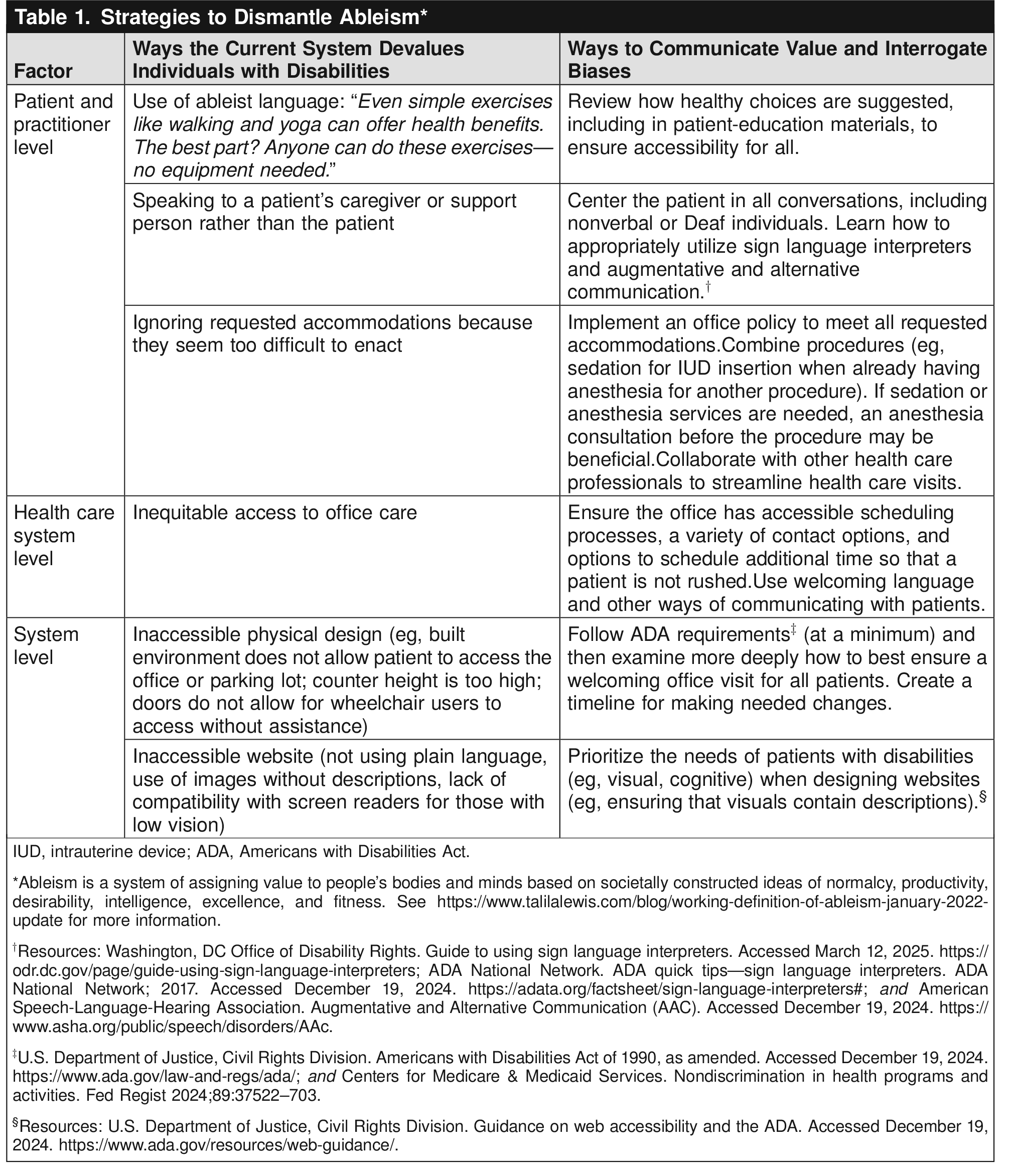
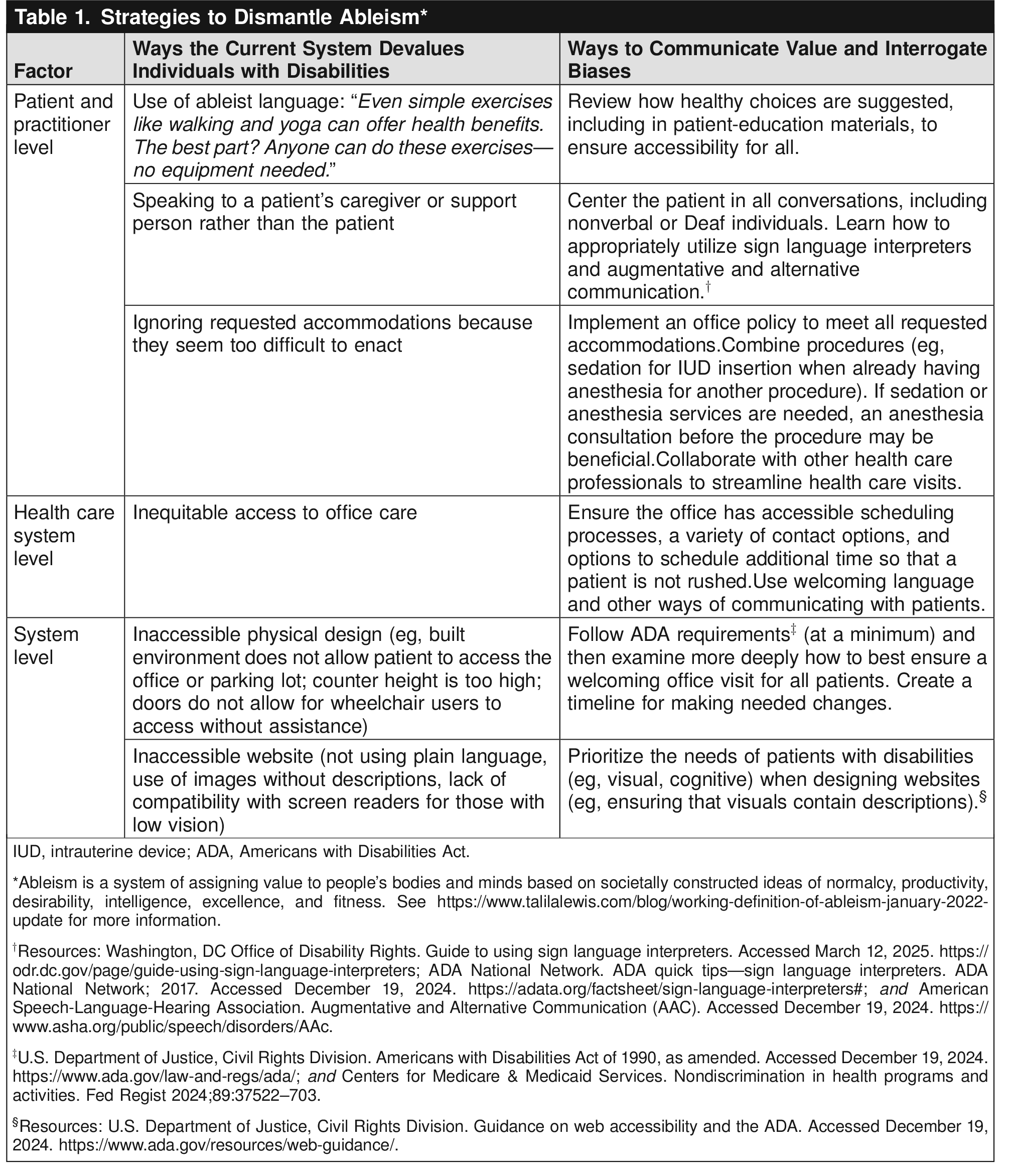
    Health care professionals must be aware of ableism, defined by disability justice activist Talia Lewis as, “A system of assigning value to people's bodies and minds based on societally constructed ideas of normalcy, productivity, desirability, intelligence, excellence, and fitness” Table 1 for a list of strategies to dismantle ableism. Additionally, health care professionals may engage in diagnostic overshadowing—“…the attribution of symptoms to an existing diagnosis rather than a potential co-morbid condition,” causing missed or late treatment for conditions incorrectly assumed to be associated with a patient's disability Access to Obstetric and Gynecologic Care for Patients With Disabilities

    Individuals with disabilities still face substantial barriers to health care and are at higher risk of receiving inadequate care than those without disabilities 10. Much of the still-limited research on disabilities is focused on mobility or physical disability; fewer data are available on cognitive and other disabilities, an area of much-needed research. Barriers to adequate health care for patients with mobility impairments include, but are not limited to, inaccessible facilities with lack of options for and lack of training on transferring patients from their mobility device to an examination table, inadequate appointment length, and inappropriate support for patients. The lack of training ob-gyns receive on the provision of health care to patients with disabilities results in deficits in knowledge and clinical skills, along with biased approaches in caring for this population 7.

    Although disability alone does not constitute poor health, due to disparities in access and other barriers, people with disabilities are more likely than those without disabilities to have poor health. A cross-sectional study demonstrated that disabled individuals are less likely to receive gynecologic cancer screenings and less likely to receive timely and consistent prenatal care, even though they are similarly likely to get pregnant as patients without disabilities 11. Notably, like everyone, disabled people hold overlapping and multiple identities that shape their experiences (eg, race, ethnicity, culture, class, gender, gender identity). The concept of intersectionality, coined by feminist scholar Kimberle Crenshaw, acknowledges, “…the multiple identities of an individual and how these result in various experiences of disadvantage or advantage” 12. How an individual experiences disability may differ depending on these multiple identities and whether the additional identities confer privilege or compound disadvantage.

    Physicians cannot legally discriminate against a patient because of disability 13, and law mandates that health care professionals accommodate all patients. Despite that, basic care remains inaccessible for some disabled patients. Many opportunities exist to improve the reproductive care currently provided to patients. It is imperative that ob-gyns commit to making their care as accessible as possible to ensure that all patients receive adequate and complete reproductive health care.


    Recommendations and Conclusions

    Pre-visit Considerations

    Obstetrician–gynecologists and other reproductive health care professionals should understand the barriers that prevent disabled people from accessing reproductive health care. This is critical in identifying inequities and informing patient-centered approaches to services.

    The stated goal of the ADA is, “…to assure equality of opportunity, full participation, independent living, and economic self-sufficiency…” for people with disabilities in the context of “the continuing existence of unfair and unnecessary discrimination and prejudice…” against people with disabilities Box 1 for barriers to care to be identified in a practice.

    Box 1.

    The Axes of Access

    • Physical access

    Definition: The health care environment, including care settings, is free of physical barriers to care.

    • Strategies

      •  Parking is accessible.

      •  The building can be entered.

      •  The elevator is functional.

      •  Doors and hallways are kept clear.

      •  Bathrooms are accessible, including toilet, sink, and grab bars.

      •  Equipment is accessible.

        •   Examination tables are height-adjustable.

        •   Specialized accessible equipment is available (eg, diagnostic imaging, ophthalmic equipment, dental equipment).

        •   Policies and procedures are optimized to ensure that physical access is maintained.

    • Policy and procedural access

    Definition: Policies and procedures promote accessibility of scheduling, staffing, and administrative resources.

    • Strategies

      •  Policies and procedures should be reviewed and include the following:

      •  Patients are asked about needs for accommodation at the time of the first interaction with a health care provider.

      •  Any special needs are flagged in the scheduling system and electronic record.

      •  When patients are expected for an appointment, accessible equipment and staff are reserved.

      •  Service animals that are qualified under ADA provisions are allowed.

      •  Staff are correctly trained in disability etiquette (eg, a wheelchair is part of the patient's personal space) and methods of transfer.

      •  Communication policies are reviewed.

    • Communication access

    Definition: Provider and system factors do not limit a patient's ability to make an appointment, arrange for follow-up, understand goals of care, or adhere to prescribed therapy.

    • Strategies

      •  Printed forms are available in large font and in modified versions that accommodate patients who have low literacy.

      •  American Sign Language interpreters are available free of charge.

      •  Amplification devices for patients with impaired hearing are accommodated.

      •  E-mail or text messaging is allowed to make appointments and communicate with providers.

      •  Work is done to change systematic problems (eg, hard-to-read prescription labels).

    ADA, the Americans with Disabilities Act.

    Reprinted from Lagu T, Iezzoni LI, Lindenauer PK. The axes of access--improving care for patients with disabilities. N Engl J Med 2014;370:1847–51. doi: 10.1056/NEJMsb1315940. Copyright© 2025 Massachusetts Medical Society. Reprinted with permission from Massachusetts Medical Society.

    The degree of difficulty accessing care varies by patient. Where possible, practices should consider universal design. The intent of universal design is to simplify life for everyone by making products, communications, and the physical environment more usable by as many people as possible at little or no extra cost 16. Universal design benefits people of all ages and abilities, although it does not replace the need for accommodations for all people with disabilities. When required, health care professionals must provide individualized accommodations based on a patient's individual needs. Additionally, ACOG encourages adoption of hiring practices at health care institutions and practices that provide for a diverse staff, including individuals with disabilities.

    Scheduling

    Having a space on referral forms for the inclusion of specific accommodations may reduce the stress a first-time patient experiences when presenting to a new office, where the availability of necessary accommodations is unknown. It also is critical that a health care office ask about a patient's needs and that the necessary accommodations are provided. Incorporating accommodations into the registration or prebook process is another way to decrease stress for both the patient and the health care team. Office websites should be accessible to persons with disabilities, including those with limitations in vision. All forms or electronic tablets used for check-in at health care institutions and practices should be accessible to persons with disabilities, and staff should be available to assist if necessary. If a patient requires additional time for transfer or for an examination, that should be built into the schedule

    Visit Considerations

    Consent

    Obstetrician–gynecologists and other reproductive health care professionals should assume that patients have the capacity to consent for themselves, unless proven otherwise. They should recognize that capacity can change and should support patients' agency to exercise consent.

    Intellectual disability is characterized by significant limitations in intellectual functioning (generally measured as an IQ of 70–75 or lower) and in adaptive behavior, including conceptual, social, and practical skills, which originates before the age of 18 years 19. Adult patients are presumed to have decision-making capacity unless formally determined otherwise, and health care professionals generally can determine a patient's capacity to make informed decisions through typical patient–physician interactions. A structured approach also may be used to assess a patient's capacity 19 20. An adult patient with decision-making capacity has the right to refuse treatment, including during pregnancy, labor, and delivery and when treatment is necessary for the patient's health or survival, that of the patient's fetus, or both 21. Clinicians should communicate clearly and directly with a patient. If the patient does not understand the questions or instructions, the clinician can repeat what has been said, use other words, or find another way to provide the information.

    As detailed by the National Council on Disability and the Center for American Progress, guardianship has major civil rights implications for disabled individuals, especially regarding reproductive health care decisions

    Support People

    Patients' caregivers, family members, or other support people should be integrated into the visit if the patient desires. At the beginning of the visit, the health care professional should determine the role of the caregiver (eg, is the support person a medical decision maker or someone who provides physical support?). Support people, as opposed to guardians, are not legally appointed and do not make decisions for the patient. A discussion should take place to clarify whom to discuss care plans with and how the patient wants that information communicated. Because many patients may not be forthcoming with reproductive health concerns if a family member is present in the room, patients should have the opportunity to discuss health issues with a health care professional one-on-one to ensure that their questions are addressed and their needs are met. It is important that family members or friends are not relied on for assisting in transferring or moving a patient for examinations or for sign language interpretation, unless requested by the patient.

    Physical Space

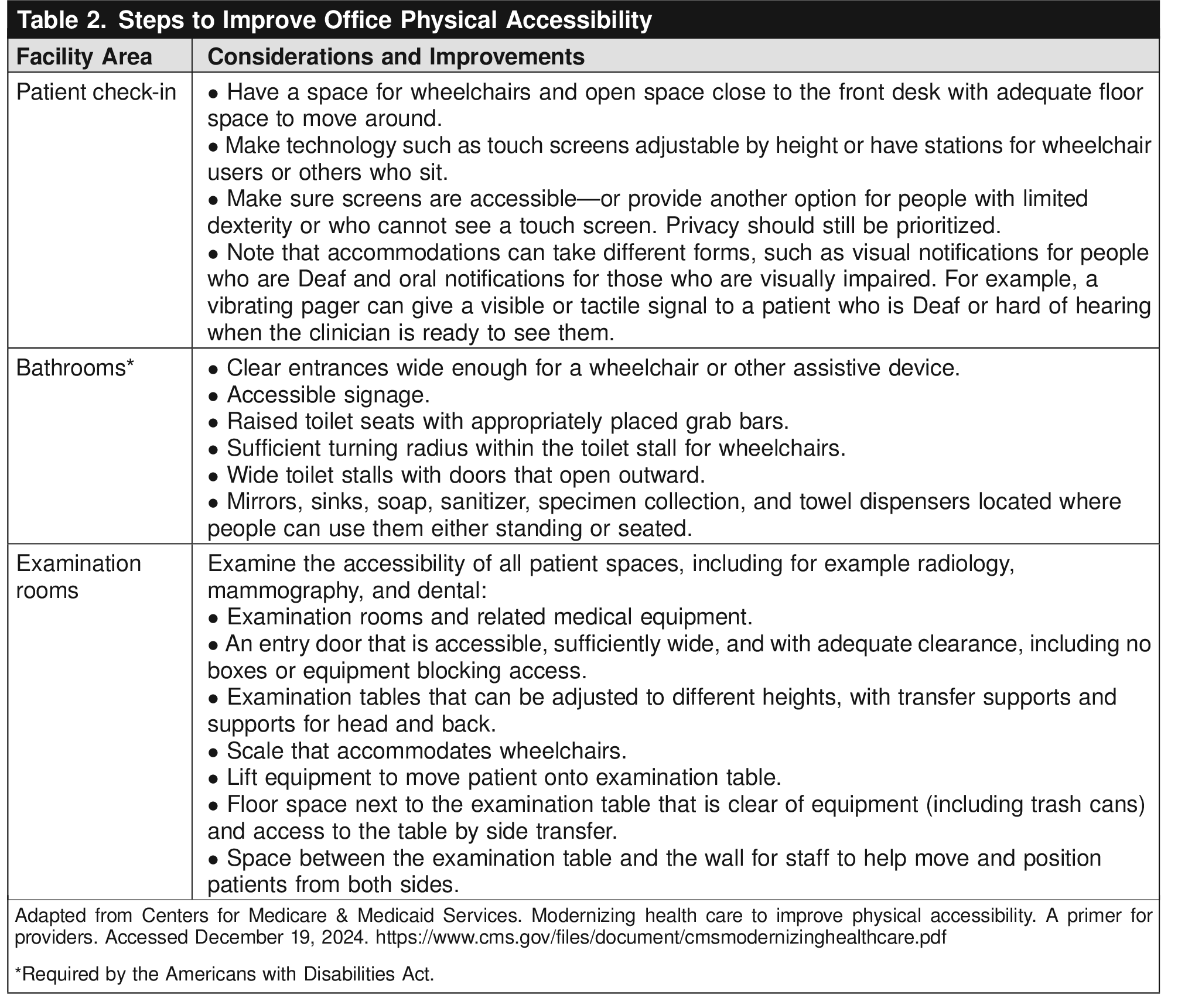
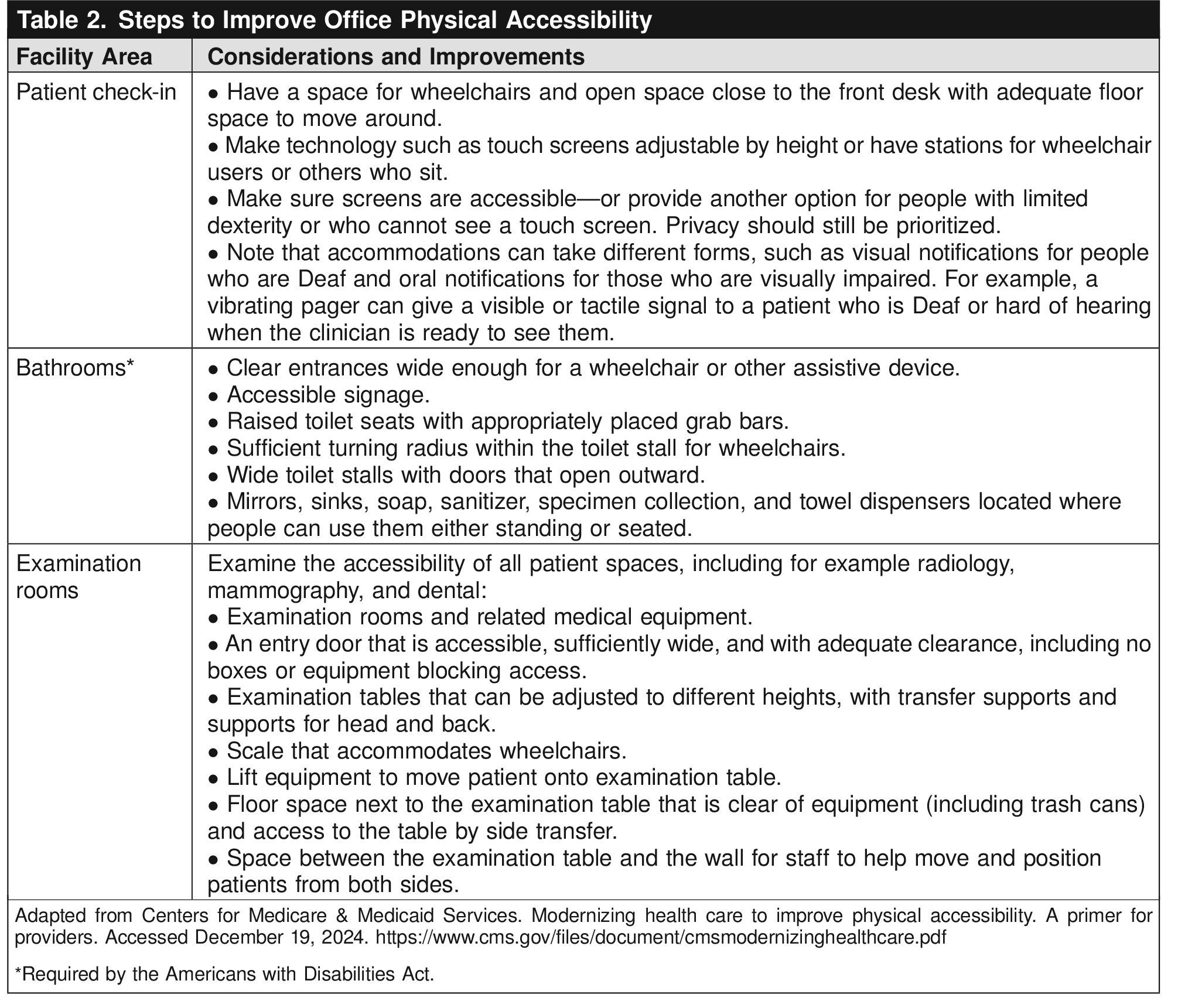
    There are many steps to be taken to ensure that the needs of all patients are met. The initial steps include physical space Table 2:

    • Are front doors equipped with automatic openers? A heavy, inaccessible door to the office often is the first barrier patients face. Even a doorbell can be helpful and more welcoming.

    • Is there adequate space for patients with physical disabilities to maneuver a wheelchair through the front doors, to comfortably interact with front desk staff, and to access the examination rooms and bathrooms?

    • Are there examination tables that accommodate all people? Do they reach low enough to the ground and have adequate space to the side to ease transfer?

    • Are there accommodations for patients with sensory disabilities, such as deafness, blindness, or limited dexterity?

    • Does the office policy ensure that patients can easily attend appointments accompanied by their service animals Access to Obstetric and Gynecologic Care for Patients With Disabilities

    If the office space cannot be modified (beyond what is required by federal law), staff should explain the limitations to the patient ahead of time and develop a plan to accommodate the needs for that visit. It is important to identify areas for improvement to ensure that all patients can safely and comfortably access the office space and receive necessary health care.

    Screening Considerations

    Patients with disabilities should have access to the same health care as all patients, including all age-appropriate screening tests. It is important that health care teams acknowledge their inherent biases and offer and facilitate access to appropriate care, including recommended screening tests.

    Breast and Cervical Cancer Screening

    Like all patients, individuals with disabilities require preventive services. However, there are consistent disparities in rates of breast and cervical cancer screening for disabled patients when compared with the general population. A 2021 review of National Health Interview Survey data determined that patients with self-reported disabilities, including those with movement difficulties and complex activity limitations, had a higher likelihood of breast and cervical cancer diagnoses compared with the general population 27. Data from the 2020 Behavioral Risk Factor Surveillance System and the 2021 National Health Interview Survey showed that women with any disability were less likely to have received a mammogram in the previous 2 years and less likely to be up to date on cervical cancer screening than women without disabilities

    Screening for Intimate Partner Violence and Sexual Abuse

    Having a disability is a known risk factor for intimate partner violence, and individuals with disabilities are at nearly double the lifetime risk of intimate partner violence victimization as those without disabilities 29. Individuals with physical and developmental disabilities may be reliant on their partners or caregivers for help, creating a dangerous dynamic in which abusers may be in a position to physically abuse their victims by withholding medication, preventing use of assistive equipment such as canes or wheelchairs, and sabotaging other personal service needs such as help with bathing, bathroom functions, or eating 30.

    Although disability communities are diverse and abuse is experienced differently, the rate of sexual abuse in patients with disabilities, particularly those who need personal caregivers, is high. A 2021 systematic review and meta-analysis of U.S. and international data showed a 31.3% prevalence rate of unwanted sexual activity in women with intellectual disabilities; the rate of abuse was found to increase as the severity of the intellectual disability increased 31. A 2020 study reported that 25% of women with Down syndrome had experienced unwanted sexual advances 32. Although it can be challenging to screen for sexual abuse in patients who present to care with family members or caregivers, it is essential to incorporate these screening practices into routine care to safely identify patients at risk.

    Additionally, women with disabilities are at greater risk of physical abuse during pregnancy. A study of the Massachusetts Pregnancy Risk Assessment Monitoring System data found that women with disabilities were three to four times more likely to experience abuse before and during pregnancy than pregnant women without disabilities 33. Nevertheless, in a qualitative study of U.S women with limitations in hearing, vision, cognition, mobility, self-care, and independent living, eight of the nine respondents (89%) reported that no health care professional had ever asked them about violence during their pregnancies 34.

    Screening for Sexually Transmitted Infections

    All patients should be screened for STIs and offered testing in accordance with Centers for Disease Control and Prevention guidelines 35. Data suggest that health care professionals who care for patients with physical and intellectual disabilities often assume patients are not sexually active, avoid asking questions about sexual history and activity, and fail to provide sexuality education information. Although data on rates of STIs in patients with intellectual disabilities are lacking, the increased risk of abuse and lack of access to sexuality education for many patients makes screening especially important 36. Oftentimes, individuals might not have the ability or feel safe to disclose abuse, putting patients at risk for unidentified STIs. Clinicians should keep in mind that STIs also may be the result of consensual sexual relationships.

    Reproductive Health Care Services

    Patients with disabilities should be provided access to the full range of reproductive health services, including comprehensive contraceptive counseling and prenatal and abortion care. This care should be offered in a safe and welcoming manner.

    Menstrual Hygiene

    Anticipatory guidance before menarche can be very useful and may lessen anxiety felt by patients and caregivers 37. Some patients with difficulty managing menstrual blood loss due to physical disability or intellectual disability may be candidates for hormonal suppression of menses. Other individuals may be seeking education on menstrual health. A 2020 study of young women with Down syndrome demonstrated that, although they were less likely to access reproductive health care compared with the general population, more than half of them received medication for menstrual issues 32. For more details on options for and approaches to menstrual suppression, see ACOG Clinical Consensus No.3, General Approaches to Medical Management of Menstrual Suppression 37.

    Contraceptive Access

    Sexuality is a human right, and individuals with disabilities have the same right to sexual expression as their peers without disabilities. Education on reproductive health, expectations for fertility, and discussions about healthy relationships are important for all patients, and ob-gyns should engage their patients with disabilities in these discussions. As noted by the National Partnership for Women and Families, the ability to control one's own reproductive life allows individuals with disabilities to participate fully in society 39, even if this conflicts with the wishes of their caregivers. This may require helping patients to navigate getting care without their trusted caregiver for the first time or helping to navigate challenging conversations with the patient and caregiver. With access to and support for sexual expression, many of these patients will require access to contraceptive choice. The American College of Obstetricians and Gynecologists recommends the use of a patient-centered reproductive justice framework and a shared decision-making model in the provision of supportive contraceptive counseling and care to help patients achieve their reproductive goals 40.

    There is a long history of forced sterilization of patients with disabilities, resulting in the erosion of trust in the health care system. See ACOG Committee Statement No. 8, Permanent Contraception: Ethical Issues and Considerations, for further details on counseling considerations for permanent contraception 41. Patients require full access to information about various contraceptive methods, including adverse effects. As with all patients who seek reproductive health care, ob-gyns should engage individuals with disabilities in patient-centered contraceptive counseling and offer the full spectrum of contraceptive care, from initiation to discontinuation.

    Abortion Access

    The changes in the national legal landscape of abortion access will further marginalize individuals with disabilities 43. It is critical that health care professionals who provide reproductive health care continue to advocate for equitable access to care for all patients and guard against potential reproductive coercion from partners or caregivers 44.

    Pregnancy and Parenting

    A 2018 study of National Survey of Family Growth data found that 19.5% of birthing respondents had at least one disability, which is similar to the prevalence of disability among all women of reproductive age in the United States 45. A 2017 study demonstrated that women with disabilities are as likely as their nondisabled peers to desire pregnancy (61% and 60%, respectively), but fewer intend to have a baby in the future (43% and 50%, respectively) 46. More research is needed to further identify factors that affect the desire of an individual with a disability to parent and barriers that could be eliminated.

    In addition to negative attitudes from the general public toward the parenting abilities of individuals with disabilities, studies widely document that patients with disabilities have had negative experiences with obstetric care professionals who may doubt a patient's ability to parent, carry a pregnancy, and deliver safely 46. This bias contributes to delays in accessing prenatal care or avoiding it altogether. A 2022 study of National Survey of Family Growth data found that, in comparison with those without disabilities, women with disabilities were more likely to have smoked during pregnancy, delayed entry into prenatal care, given birth prematurely, and have had a neonate with low birth weight 47. Other studies have shown similar increased associations with adverse conditions in the pregnancies of individuals with disabilities, including gestational diabetes, hypertensive disorders, and increased risk of cesarean delivery 48. According to experts, given the risk factors women with disabilities have going into pregnancy, there likely is an increased theoretical risk of maternal mortality 49. All-cause mortality among community-dwelling adults with any disability is increased compared with adults without disabilities (adjusted hazard ratio 1.51, 95% CI, 1.45–1.57), with a greater magnitude of the association between disability and death in young and middle-aged adults (age 18–64 years) 50. Patients should receive evidence-based counseling about their individual risks in pregnancy based on specific medical conditions, avoiding making generalized assumptions about limitations that may be associated with disability. Genetic screening should be discussed and offered according to typical office guidelines for all patients, but consideration should be given that there is a perception of inherent ableism built into genetic screening that can be offensive to some patients.


    Conclusion

    For the more than 70 million adults with disabilities living in the United States, access to health care is limited and the quality of health care provided is inadequate. More work needs to be done to improve the access and quality of health care for individuals with disabilities. Increasing training and exposure to patients with different disabilities during medical training programs will not only help improve the lack of experience, but also help challenge the implicit and explicit biases that currently exist in health care.

    Use of Language

    The American College of Obstetricians and Gynecologists recognizes and supports the gender diversity of all patients who seek obstetric and gynecologic care. In original portions of this document, authors seek to use gender-inclusive language or gender-neutral language. When describing research findings, this document uses gender terminology reported by investigators. To review ACOG's policy on inclusive language, see https://www.acog.org/clinical-information/policy-and-position-statements/statements-of-policy/2022/inclusive-language.


    Conflict of Interest Statement

    All ACOG committee members and authors have submitted a conflict of interest disclosure statement related to this published product. Any potential conflicts have been considered and managed in accordance with ACOG's Conflict of Interest Disclosure Policy. The ACOG policies can be found on acog.org. For products jointly developed with other organizations, conflict of interest disclosures by representatives of the other organizations are addressed by those organizations. The American College of Obstetricians and Gynecologists has neither solicited nor accepted any commercial involvement in the development of the content of this published product.


    References

    1. Wooldridge S. Writing respectfully: person-first and identity-first language . Accessed December 19, 2024. https://www.nih.gov/about-nih/what-we-do/science-health-public-trust/perspectives/writing-respectfully-person-first-identity-first-language
      Article Locations:
      Article Location
    2. U.S. Department of Justice, Civil Rights Division. Introduction to the Americans with Disabilities Act . Accessed December 19, 2024. https://www.ada.gov/topics/intro-to-ada/
      Article Locations:
      Article Location
    3. World Health Organization. International classification of functioning, disability and health (ICF) . Accessed December 19, 2024. https://www.who.int/classifications/international-classification-of-functioning-disability-and-health
      Article Locations:
      Article Location
    4. Jain NB, Harris K. Conceptual models of disability . Accessed December 19, 2024. https://now.aapmr.org/conceptual-models-of-disability/
      Article Locations:
      Article Location
    5. Centers for Disease Control and Prevention. Disability and health data system (DHDS) . Accessed December 19, 2024. https://www.cdc.gov/dhds/about/?CDC_AAref_Val=
      Article Locations:
      Article Location
    6. Holt L, Carney MH, Duncanson L, Hazen C, Kumar A, McKeon BA, et al. Perceived barriers to gynecologic care by women who use wheelchairs. Cureus 2021; 13: e15647. doi: 10.7759/cureus.15647
      Article Locations:
      Article Location
    7. Taouk LH, Fialkow MF, Schulkin JA. Provision of reproductive healthcare to women with disabilities: a survey of obstetrician-gynecologists' training, practices, and perceived barriers. Health Equity 2018; 2: 207– 15. doi: 10.1089/heq.2018.0014
      Article Locations:
      Article LocationArticle Location
    8. Lewis TA. Working definition of ableism - January 2022 update . Accessed December 19, 2024. https://www.talilalewis.com/blog/working-definition-of-ableism-january-2022-update
      Article Locations:
      Article Location
    9. The Joint Commission. Diagnostic overshadowing among groups experiencing health disparities . Accessed December 19, 2024. https://www.jointcommission.org/-/media/tjc/documents/resources/patient-safety-topics/sentinel-event/sea-65-diagnostic-overshadowing-6-16-22-final.pdf
      Article Locations:
      Article Location
    10. Reichard A, Stolzle H, Fox MH. Health disparities among adults with physical disabilities or cognitive limitations compared to individuals with no disabilities in the United States. Disabil Health J 2011; 4: 59– 67. doi: 10.1016/j.dhjo.2010.05.003
      Article Locations:
      Article Location
    11. Biggs MA, Schroeder R, Casebolt MT, Laureano BI, Wilson-Beattie RL, Ralph LJ, et al. Access to reproductive health services among people with disabilities. JAMA Netw Open 2023; 6: e2344877. doi: 10.1001/jamanetworkopen.2023.44877
      Article Locations:
      Article Location
    12. Moodley J, Graham L. The importance of intersectionality in disability and gender studies. Agenda 2015; 29: 24– 33. doi: 10.1080/10130950.2015.1041802
      Article Locations:
      Article Location
    13. Lagu T, Haywood C, Reimold K, DeJong C, Walker Sterling R, Iezzoni LI. ' I am not the doctor for you': physicians' attitudes about caring for people with disabilities. Health Aff (Millwood) 2022; 41: 1387– 95. doi: 10.1377/hlthaff.2022.00475
      Article Locations:
      Article Location
    14. U.S. Department of Justice, Civil Rights Division. Americans with Disabilities Act of 1990, as amended . Accessed December 19, 2024. https://www.ada.gov/law-and-regs/ada/
      Article Locations:
      Article Location
    15. Disability Rights California. Access to health care for people with disabilities under the ADA and other civil rights laws . Accessed December 19, 2024. https://www.disabilityrightsca.org/publications/access-to-health-care-for-people-with-disabilities-under-the-ada-and-other-civil
      Article Locations:
      Article Location
    16. Hamraie A. Building access: universal design and the politics of disability . University of Minnesota Press; 2017.
      Article Locations:
      Article Location
    17. Centers for Medicare & Medicaid Services. How to improve physical accessibility at your health care facility . Accessed December 19, 2024. https://www.cms.gov/files/document/physical-accessibility-booklet.pdf
      Article Locations:
      Article Location
    18. American Association on Intellectual and Developmental Disabilities. Defining criteria for intellectual disability . Accessed December 19, 2024. https://aaidd.org/intellectual-disability/definition
      Article Locations:
      Article Location
    19. Barstow C, Shahan B, Roberts M. Evaluating medical decision-making capacity in practice. Am Fam Physician 2018; 98: 40– 6.
      Article Locations:
      Article LocationArticle Location
    20. Appelbaum PS. Clinical practice. Assessment of patients' competence to consent to treatment. N Engl J Med 2007; 357: 1834– 40. doi: 10.1056/NEJMcp074045
      Article Locations:
      Article Location
    21. Informed consent and shared decision making in obstetrics and gynecology. ACOG Committee Opinion No. 819.American College of Obstetricians and Gynecologists. Obstet Gynecol 2021; 137: e34– 41. doi: 10.1097/AOG.0000000000004247
      Article Locations:
      Article Location
    22. Center for American Progress. Reproductive justice for disabled women: ending systemic discrimination . Accessed December 19, 2024. https://www.americanprogress.org/article/reproductive-justice-for-disabled-women-ending-systemic-discrimination/
      Article Locations:
      Article Location
    23. National Council on Disability. Beyond guardianship: toward alternatives that promote greater self-determination . Accessed December 19, 2024. https://www.ncd.gov/assets/uploads/docs/ncd-guardianship-report-accessible.pdf
      Article Locations:
      Article LocationArticle Location
    24. Center for American Progress. Rethinking guardianship to protect disabled people's reproductive rights . Accessed December 19, 2024. https://www.americanprogress.org/article/rethinking-guardianship-to-protect-disabled-peoples-reproductive-rights/
      Article Locations:
      Article Location
    25. U.S. Department of Justice, Civil Rights Division. Service animals . Accessed December 19, 2024. https://www.ada.gov/topics/service-animals/
      Article Locations:
      Article Location
    26. U.S. Department of Justice, Civil Rights Division. Frequently asked questions about service animals and the ADA . Accessed December 19, 2024. https://www.ada.gov/resources/service-animals-faqs/
      Article Locations:
      Article Location
    27. Iezzoni LI, Rao SR, Agaronnik ND, El-Jawahri A. Associations between disability and breast or cervical cancers, accounting for screening disparities. Med Care 2021; 59: 139– 47. doi: 10.1097/MLR.0000000000001449
      Article Locations:
      Article Location
    28. Agency for Healthcare Research and Quality. Healthcare delivery of clinical preventive services for people with disabilities . Accessed December 19, 2024. https://effectivehealthcare.ahrq.gov/products/people-with-disabilities/research
      Article Locations:
      Article LocationArticle Location
    29. Breiding MJ, Armour BS. The association between disability and intimate partner violence in the United States. Ann Epidemiol 2015; 25: 455– 7. doi: 10.1016/j.annepidem.2015.03.017
      Article Locations:
      Article Location
    30. Intimate partner violence. Committee Opinion No. 518. American College of Obstetricians and Gynecologists. Obstet Gynecol 2012; 119: 412– 7. doi: 10.1097/AOG.0b013e318249ff74
      Article Locations:
      Article Location
    31. Tomsa R, Gutu S, Cojocaru D, Gutiérrez-Bermejo B, Flores N, Jenaro C. Prevalence of sexual abuse in adults with intellectual disability: systematic review and meta-analysis. Int J Environ Res Public Health 2021; 18: 1980. doi: 10.3390/ijerph18041980
      Article Locations:
      Article Location
    32. Smith AJ, Applebaum J, Tanner EJ, Capone GT. Gynecologic care in women with down syndrome: findings from a national registry. Obstet Gynecol 2020; 136: 518– 23. doi: 10.1097/AOG.0000000000003997
      Article Locations:
      Article LocationArticle Location
    33. Mitra M, Manning SE, Lu E. Physical abuse around the time of pregnancy among women with disabilities. Matern Child Health J 2012; 16: 802– 6. doi: 10.1007/s10995-011-0784-y
      Article Locations:
      Article Location
    34. Alhusen JL, Bloom T, Anderson J, Hughes RB. Intimate partner violence, reproductive coercion, and unintended pregnancy in women with disabilities. Disabil Health J 2020; 13: 100849. doi: 10.1016/j.dhjo.2019.100849
      Article Locations:
      Article Location
    35. Workowski KA, Bachmann LH, Chan PA, Johnston CM, Muzny CA, Park I, et al. Sexually transmitted infections treatment guidelines, 2021 [published erratum appears in MMWR Morb Mortal Wkly Rep 2023;72:107–8]. MMWR Recomm Rep 2021; 70: 1– 187. doi: 10.15585/mmwr.rr7004a1
      Article Locations:
      Article Location
    36. Shrestha PS, Ishak A, Maskey U, Neupane P, Sarwar S, Desai S, et al. Challenges in providing reproductive and gynecologic care to women with intellectual disabilities: a review of existing literature. J Family Reprod Health 2022; 16: 9– 15. doi: 10.18502/jfrh.v16i1.8589
      Article Locations:
      Article Location
    37. General approaches to medical management of menstrual suppression. ACOG Clinical Consensus No. 3. American College of Obstetricians and Gynecologists [published erratum appears in Obstet Gynecol 2024;143:e20] Obstet Gynecol 2022; 140: 528– 41. doi: 10.1097/AOG.0000000000004899
      Article Locations:
      Article LocationArticle Location
    38. Wolfrey N. Access, autonomy, and dignity: contraception for people with disabilities . Accessed December 19, 2024. https://nationalpartnership.org/wp-content/uploads/2023/02/repro-disability-contraception.pdf
      Article Locations:
      Article Location
    39. Gill M. Rethinking sexual abuse, questions of consent, and intellectual disability. Sex Res Social Policy 2010; 7: 201– 13. doi: 10.1007/s13178-010-0019-9
      Article Locations:
      Article Location
    40. Patient-centered contraceptive counseling. ACOG Committee Statement No. 1. American College of Obstetricians and Gynecologists. Obstet Gynecol 2022; 139: 350– 3. doi: 10.1097/AOG.0000000000004659
      Article Locations:
      Article Location
    41. Permanent contraception: ethical issues and considerations: ACOG Committee Statement No. 8. American College of Obstetricians and Gynecologists. Obstet Gynecol 2024; 143: e31– 9. doi: 10.1097/AOG.0000000000005474
      Article Locations:
      Article Location
    42. Ditkowsky M, Emery A, Gallagher Robbins K. State abortion bans harm more than three million disabled women . Accessed January 28, 2025. https://nationalpartnership.org/report/state-abortion-bans-harm-disabled-women/
      Article Locations:
      Article Location
    43. Hassan A, Yates L, Hing AK, Hirz AE, Hardeman R. Dobbs and disability: implications of abortion restrictions for people with chronic health conditions. Health Serv Res 2023; 58: 197– 201. doi: 10.1111/1475-6773.14108
      Article Locations:
      Article Location
    44. Reproductive and sexual coercion. ACOG Committee Opinion No. 554. American College of Obstetricians and Gynecologists. Obstet Gynecol 2013; 121: 411– 5. doi: 10.1097/01.AOG.0000426427.79586.3b
      Article Locations:
      Article Location
    45. Okoro CA, Hollis ND, Cyrus AC, Griffin-Blake S. Prevalence of disabilities and health care access by disability status and type among adults—United States, 2016. MMWR Morb Mortal Wkly Rep 2018; 67: 882– 7. doi: 10.15585/mmwr.mm6732a3
      Article Locations:
      Article Location
    46. Bloom TL, Mosher W, Alhusen J, Lantos H, Hughes RB. Fertility desires and intentions among U.S. women by disability status: findings from the 2011-2013 National Survey of Family Growth. Matern Child Health J 2017; 21: 1606– 15. doi: 10.1007/s10995-016-2250-3
      Article Locations:
      Article LocationArticle Location
    47. Horner-Johnson W, Dissanayake M, Marshall N, Snowden JM. Perinatal health risks and outcomes among US women with self-reported disability, 2011-19. Health Aff (Millwood) 2022; 41: 1477– 85. doi: 10.1377/hlthaff.2022.00497
      Article Locations:
      Article Location
    48. Tarasoff LA, Ravindran S, Malik H, Salaeva D, Brown HK. Maternal disability and risk for pregnancy, delivery, and postpartum complications: a systematic review and meta-analysis. Am J Obstet Gynecol 2020; 222: 27.e1– 32. doi: 10.1016/j.ajog.2019.07.015
      Article Locations:
      Article Location
    49. Signore C, Davis M, Tingen CM, Cernich AN. The intersection of disability and pregnancy: risks for maternal morbidity and mortality. J Womens Health (Larchmt) 2021; 30: 147– 53. doi: 10.1089/jwh.2020.8864
      Article Locations:
      Article Location
    50. Forman-Hoffman VL, Ault KL, Anderson WL, Weiner JM, Stevens A, Campbell VA, et al. Disability status, mortality, and leading causes of death in the United States community population. Med Care 2015; 53: 346– 54. doi: 10.1097/MLR.0000000000000321
      Article Locations:
      Article Location

    Published online on April 17, 2025

    Copyright 2025 by the American College of Obstetricians and Gynecologists. All rights reserved. No part of this publication may be reproduced, stored in a retrieval system, posted on the internet, or transmitted, in any form or by any means, electronic, mechanical, photocopying, recording, or otherwise, without prior written permission from the publisher.

    American College of Obstetricians and Gynecologists
    409 12th Street SW, Washington, DC 20024-2188

    Access to obstetric and gynecologic care for patients with disabilities. Committee Statement No. 18. American College of Obstetricians and Gynecologists. Obstet Gynecol 2025;145:553–563.

    The American College of Obstetricians and Gynecologists (ACOG) reviews its publications regularly; however, its publications may not reflect the most recent evidence. A reaffirmation date is included in the online version of a document to indicate when it was last reviewed. The current status and any updates of this document can be found on ACOG Clinical at acog.org/lot.

    This information is designed as an educational resource to aid clinicians in providing obstetric and gynecologic care, and use of this information is voluntary. This information should not be considered as inclusive of all proper treatments or methods of care or as a statement of the standard of care. It is not intended to substitute for the independent professional judgment of the treating clinician. Variations in practice may be warranted when, in the reasonable judgment of the treating clinician, such course of action is indicated by the condition of the patient, limitations of available resources, or advances in knowledge or technology.

    While ACOG makes every effort to present accurate and reliable information, this publication is provided “as is” without any warranty of accuracy, reliability, or otherwise, either express or implied. ACOG does not guarantee, warrant, or endorse the products or services of any firm, organization, or person. Neither ACOG nor its officers, directors, members, employees, or agents will be liable for any loss, damage, or claim with respect to any liabilities, including direct, special, indirect, or consequential damages, incurred in connection with this publication or reliance on the information presented.