

Maternal Immunization Social Media Toolkit
This toolkit is designed to provide health care professionals with ready-to-use social media messaging to promote the COVID-19, flu, RSV, and Tdap vaccines for pregnant patients, with messages that target both patient and clinician audiences.
Please use these sample posts, resources, and graphics to keep patients informed and to encourage your networks to promote maternal immunization. While the post copy, resources, and graphics below are endorsed by ACOG, we welcome you to augment this language as needed to suit your own voice.
Recommended Hashtags
- #FluFactFriday
- #RSVAndMe
- #SaferTogether
Questions? Please reach out to [email protected].
Need more support? Discover additional guidance and materials in the Physician Tools hub.
JUMP TO:
All Maternal Vaccines
For Patients
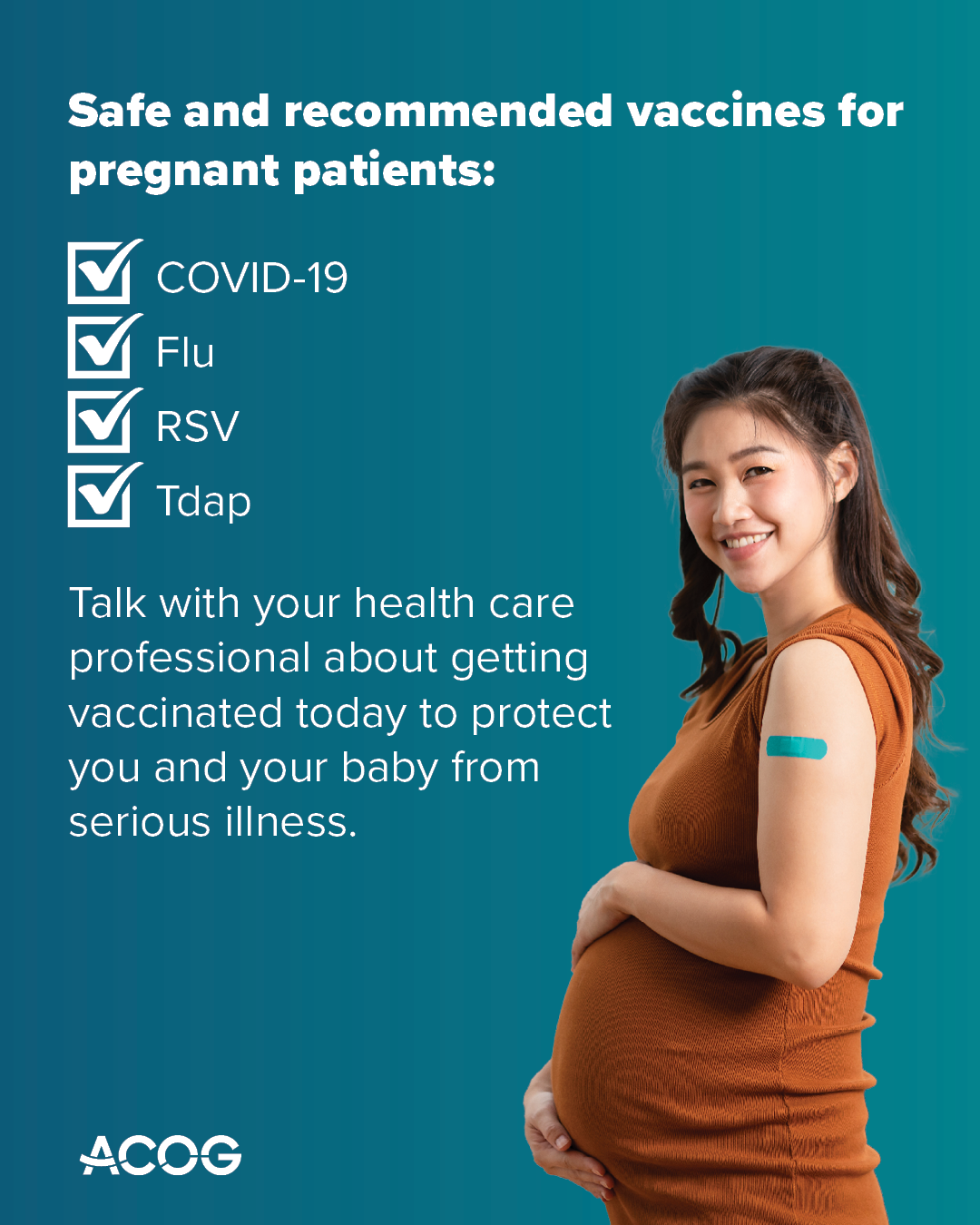
Post 1
The Tdap, RSV, flu, and COVID-19 vaccines are all safe and recommended for pregnant patients. After receiving a vaccine while pregnant, your body produces antibodies that can pass through the placenta, offering your baby protection from serious illness after birth. Learn more: http://bit.ly/3EMmEcn
Associated Resource: Get Your Recommended Vaccines During Pregnancy (Video)
Post 2
Curious about getting vaccinated during pregnancy? Hear from expert Maura Jones Pullins, MD, an ob-gyn and parent, on why she chose to get vaccinated during her pregnancy and how maternal vaccines keep pregnant patients healthy and protect babies after birth: https://bit.ly/3QIH4FC
Associated Resource: My Vaccine Choice: How Getting My Shots Protected Me and My Baby (Expert View)
For Clinicians
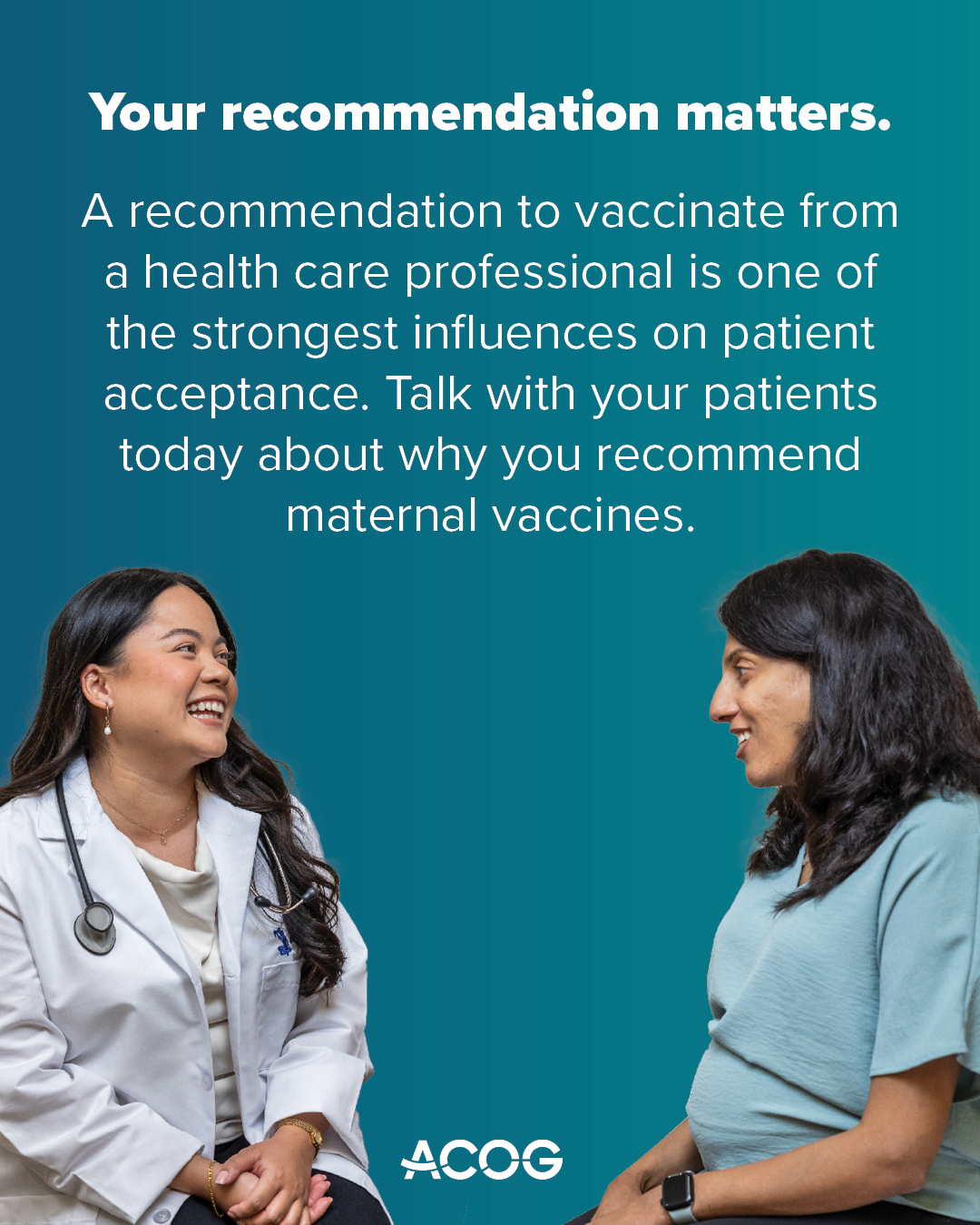
Post 1
The Tdap, RSV, flu, and COVID-19 vaccines are safe for pregnant patients and can be coadministered. Learn more about maternal vaccine recommendations and guidance: http://bit.ly/4lC3Ddz
Associated Resource: Immunization Program Page
Post 2
Studies show that maternal immunization rates are higher when a health care professional can offer and administer a vaccine during the patient visit. Health care professionals should offer immunizations as an integral part of their practice. Learn more: http://bit.ly/4lC3Ddz
Associated Resource: Immunization Program Page
COVID-19 Vaccine
For Patients
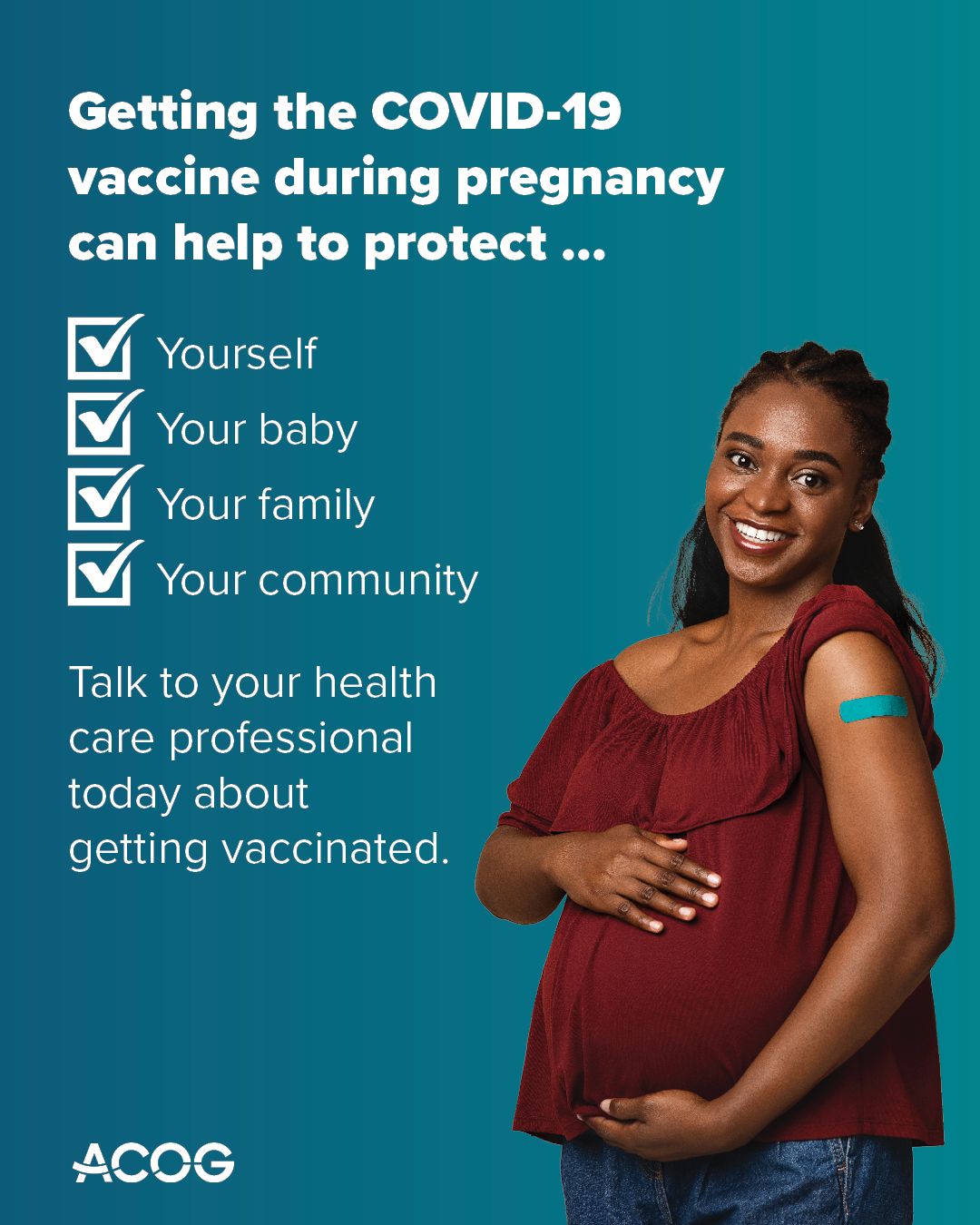
Post 1
The COVID-19 vaccine is safe and effective. When vaccinated during pregnancy, your body passes along vital antibodies, protecting your newborn until they are old enough to get vaccinated. Learn more about the importance of the COVID-19 vaccine: https://bit.ly/3FzUBxC
Associated Resource: Pregnant? Top 3 Reasons Why You Need the COVID-19 Vaccine (Infographic)
Post 2
Don’t forget to stay up to date on your vaccines! COVID-19 illness can severely affect you and your pregnancy. Vaccinating during pregnancy significantly decreases your and your newborn’s risk of COVID-19-associated hospitalization. Watch this video to learn more: https://bit.ly/4lUmQXT
Associated Resource: Get Your Recommended COVID-19 Vaccine During Pregnancy (Video)
For Clinicians
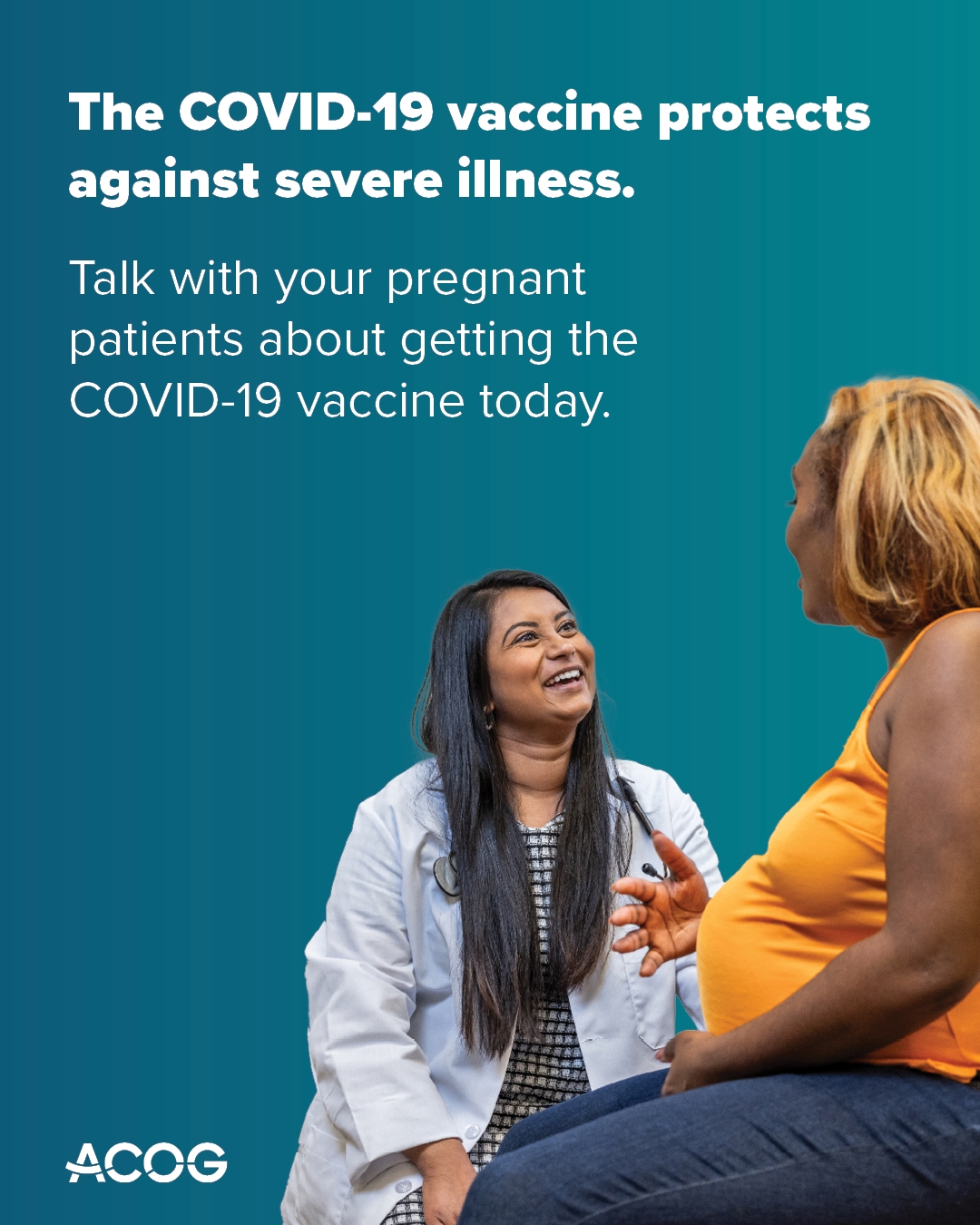
Post 1
Infants under six months old have increased rates of COVID-19-associated hospitalization. Talk to your patients about how COVID-19 vaccination during pregnancy reduces risk of severe illness and death. Use this conversation guide as a tool: https://bit.ly/4hU72SD
Associated Resource:
COVID-19 Vaccines and Pregnancy: Conversation Guide for Clinicians
Post 2
The COVID-19 vaccine can be administered during any trimester and can be coadministered with other maternal vaccines. Start the conversation with your patients early to help protect maternal and fetal health. Learn more about COVID-19 vaccination during pregnancy: http://bit.ly/3RWsM3z
Associated Resource: COVID-19 Vaccination Considerations for Obstetric–Gynecologic Care (Practice Advisory)
Flu Vaccine
For Patients
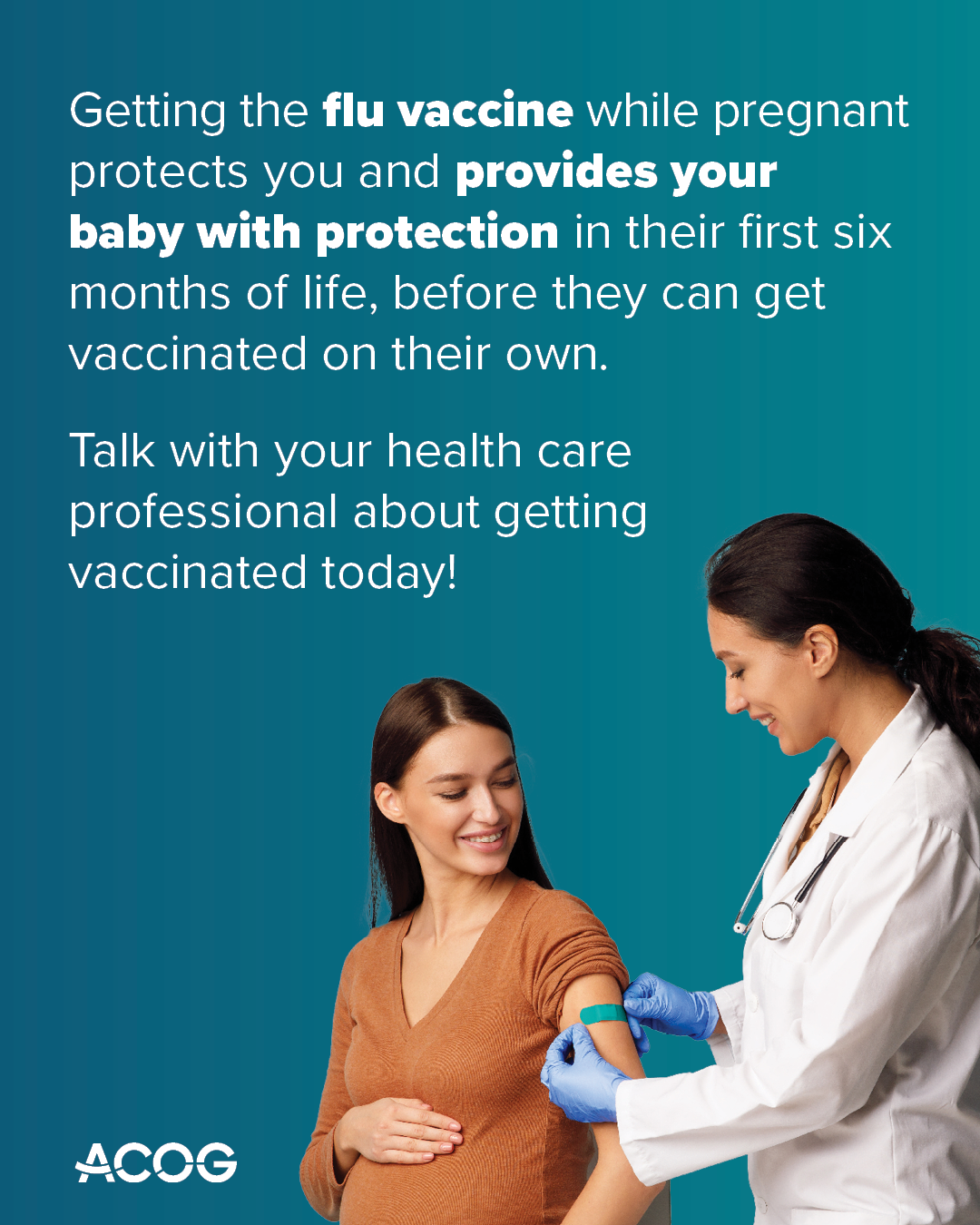
Post 1
Pregnant people and newborns are at greater risk of developing serious flu complications. Getting a flu vaccine is a safe and simple step to help protect your health and your baby’s health after birth. Talk with your health care professional or visit a local pharmacy today. Watch this video to learn more: https://bit.ly/3F4JSKW
Associated Resource: Get Your Recommended Flu Vaccine During Pregnancy (Video)
Post 2
The flu vaccine does double duty by protecting both you and your newborn. During pregnancy, the vaccine creates protective antibodies that pass on to your fetus and help to shield your newborn from serious illness until they are old enough to be vaccinated on their own. Learn more: https://bit.ly/3Ghb21E
Associated Resource: Pregnant? Top 3 Reasons Why You Need the Flu Vaccine (Downloadable Infographic)
For Clinicians
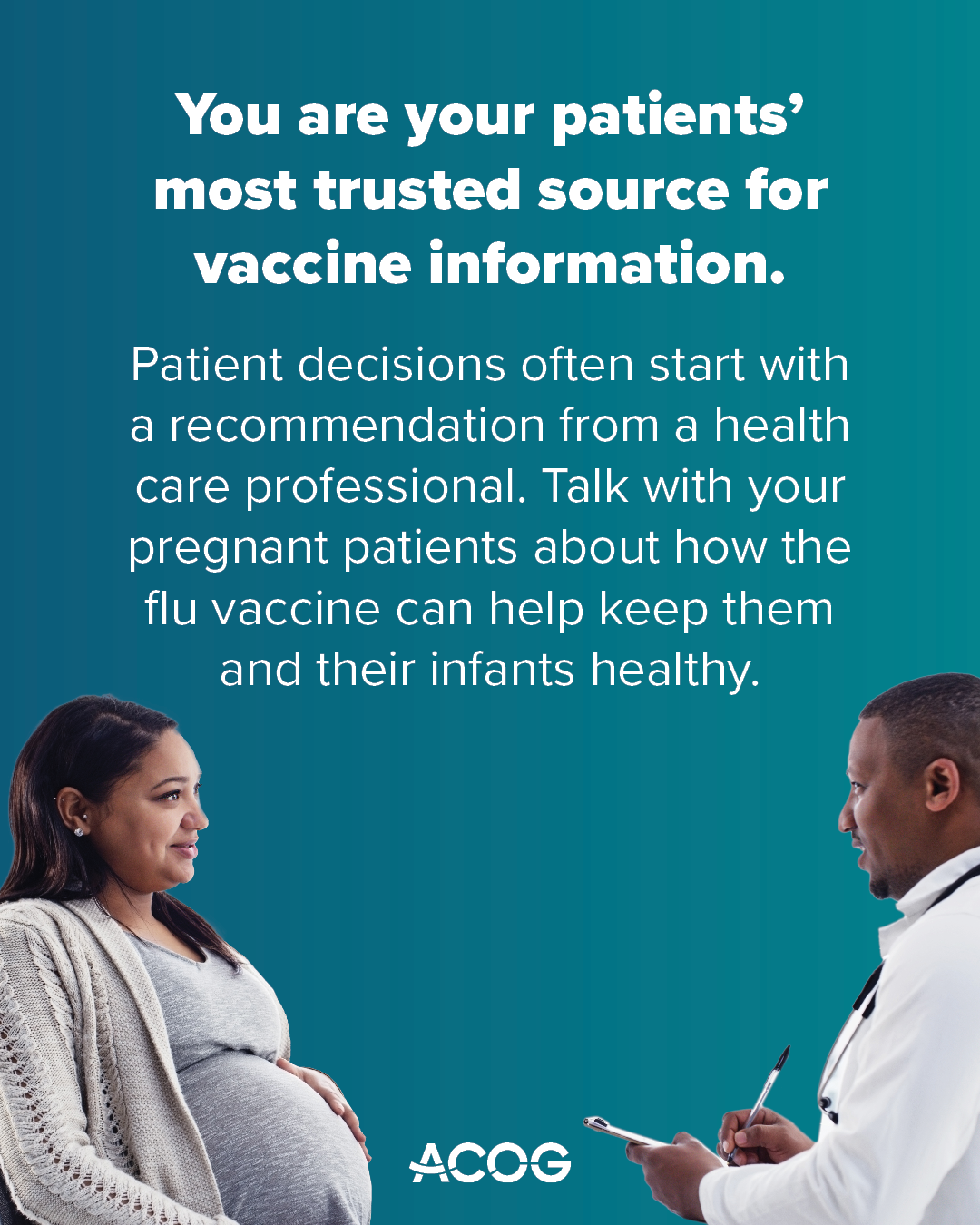
Post 1
Post 1: The flu vaccine is an essential part of prenatal care. Pregnant patients pass antibodies to their fetus through the placenta, which helps to protect newborns in their first six months of life. Review ACOG’s guidance and share the benefits of the flu vaccine with patients: http://bit.ly/3S8hPgT
Associated Resource: Influenza in Pregnancy: Prevention and Treatment (Practice Advisory)
Post 2
Pregnant people and newborns are at greater risk of developing serious flu complications. Encourage your pregnant patients to get vaccinated to protect themselves and their newborns. Find more information on administering the flu vaccine: https://bit.ly/41itNbZ
Associated Resource: Physician FAQ: Influenza
RSV Vaccine
For Patients
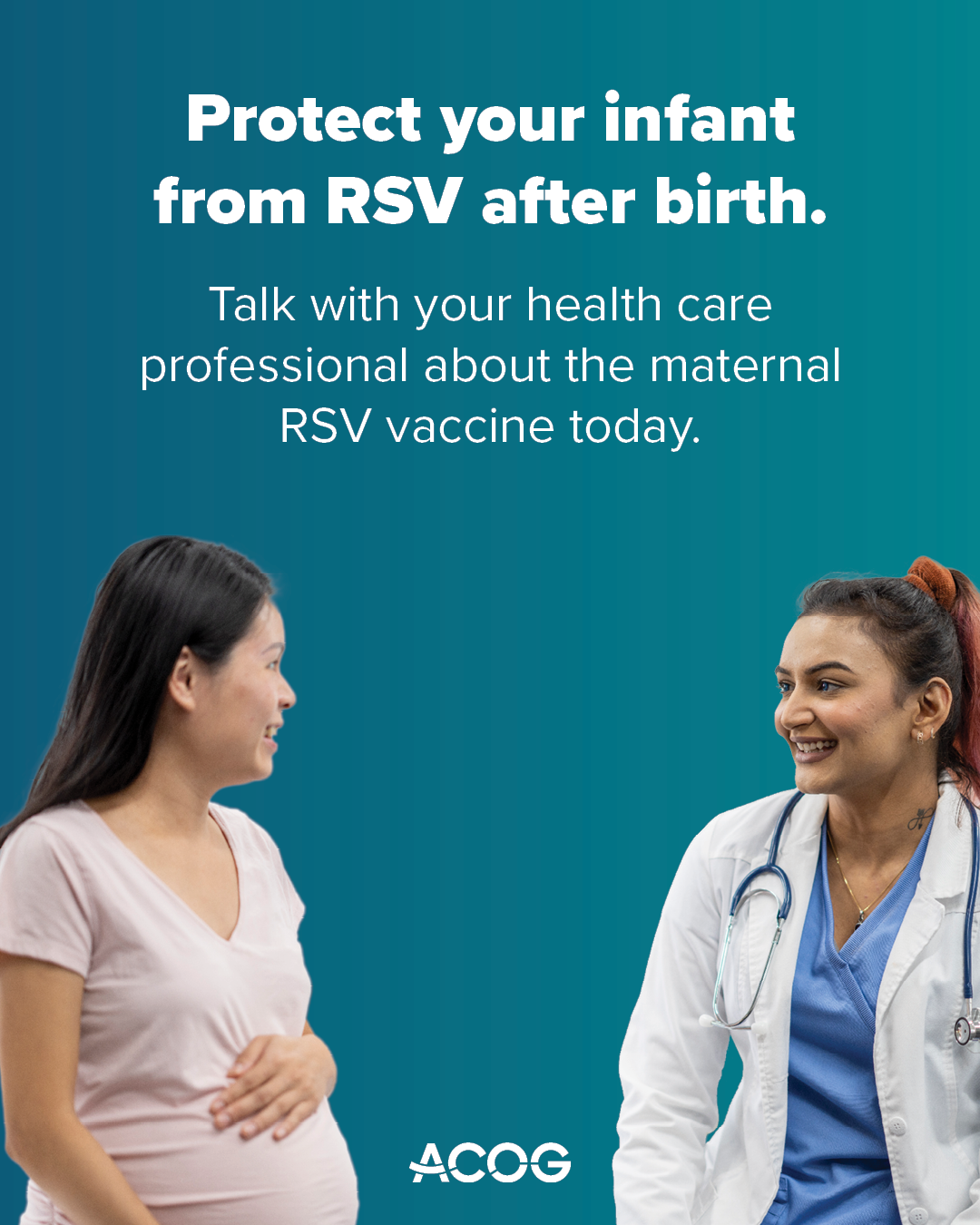
Post 1
You have the power to protect your baby from RSV! Talk with your health care professional about your options: the maternal RSV vaccine between 32 and 36 weeks of pregnancy or giving your newborn the infant monoclonal antibody. Learn more: http://bit.ly/3ZjdoDc
Associated Resource: Protecting Your Baby from RSV: Protection During Pregnancy or Protection After Birth (Infographic)
Post 2
RSV is the leading cause of infant hospitalization in the United States. Given during pregnancy, the maternal RSV vaccine provides protection for your baby from birth through their first six months of life. Watch this video to learn more: https://bit.ly/41tEb0u
Associated Resource: Get Your Recommended RSV Vaccine During Pregnancy (Video)
For Clinicians
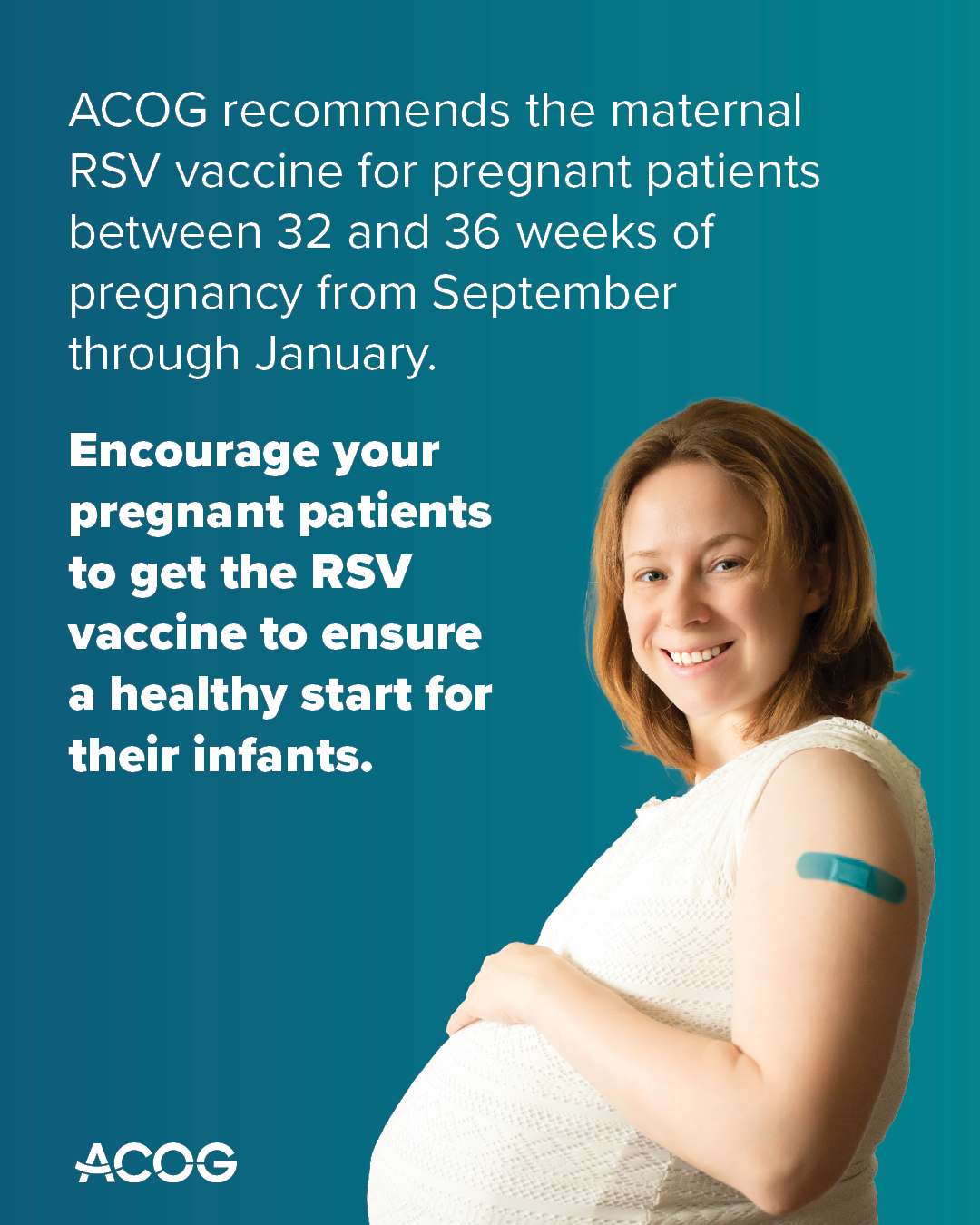
Post 1
The maternal RSV vaccine can prevent life-threatening illness in infants after birth. Talk with your pregnant patients about their options and learn more about recommending the vaccine: https://bit.ly/3QAphAv
Associated Resource:
Seven Things to Share with Your Patients About the Maternal RSV Vaccine
Post 2
The maternal RSV vaccine is a safe and effective way to protect infants from RSV immediately after birth. Start the conversation with your pregnant patients early and learn more about maternal RSV vaccine guidance: https://bit.ly/44jpqjY
Associated Resource: Maternal Respiratory Syncytial Virus Vaccination (Practice Advisory)
Tdap Vaccine
For Patients
Post 1
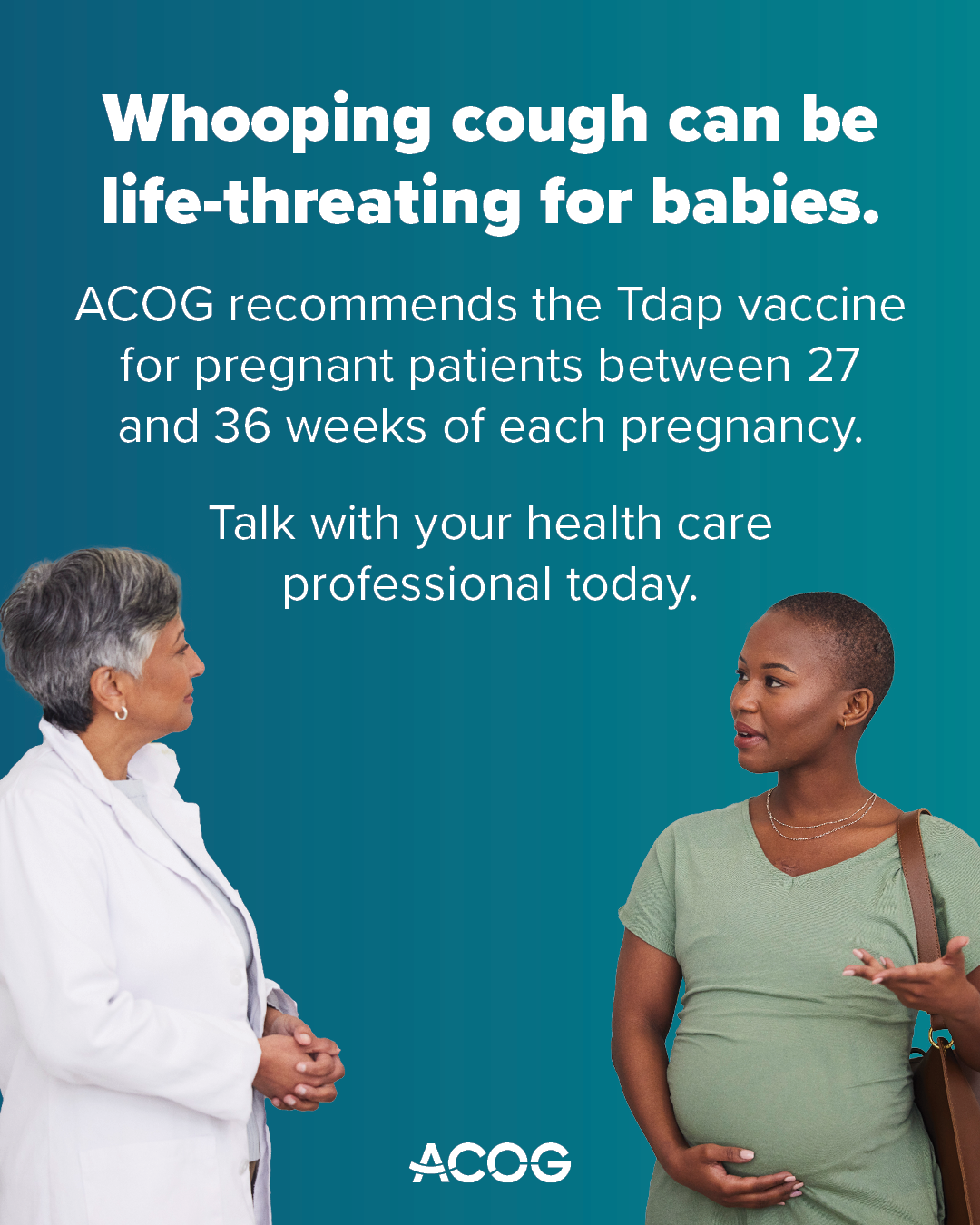
The Tdap vaccine is safe for you and your baby. Protect your infant from whooping cough by getting the Tdap vaccine during pregnancy and having anyone in close contact with your baby receive the vaccine. Learn more about the benefits of immunization: https://bit.ly/4i10yBB
Associated Resource: Why should I get Tdap during pregnancy? (Ask ACOG)
Post 2
Infants cannot receive the vaccine against whooping cough until two months old. Getting the Tdap vaccine between 27 and 36 weeks of pregnancy ensures your newborn has immediate protection from this life-threatening illness. Learn more and get answers to frequently asked questions: https://bit.ly/41kIDP0
Associated Resource: The Tdap Vaccine and Pregnancy (FAQs)
For Clinicians
Post 1
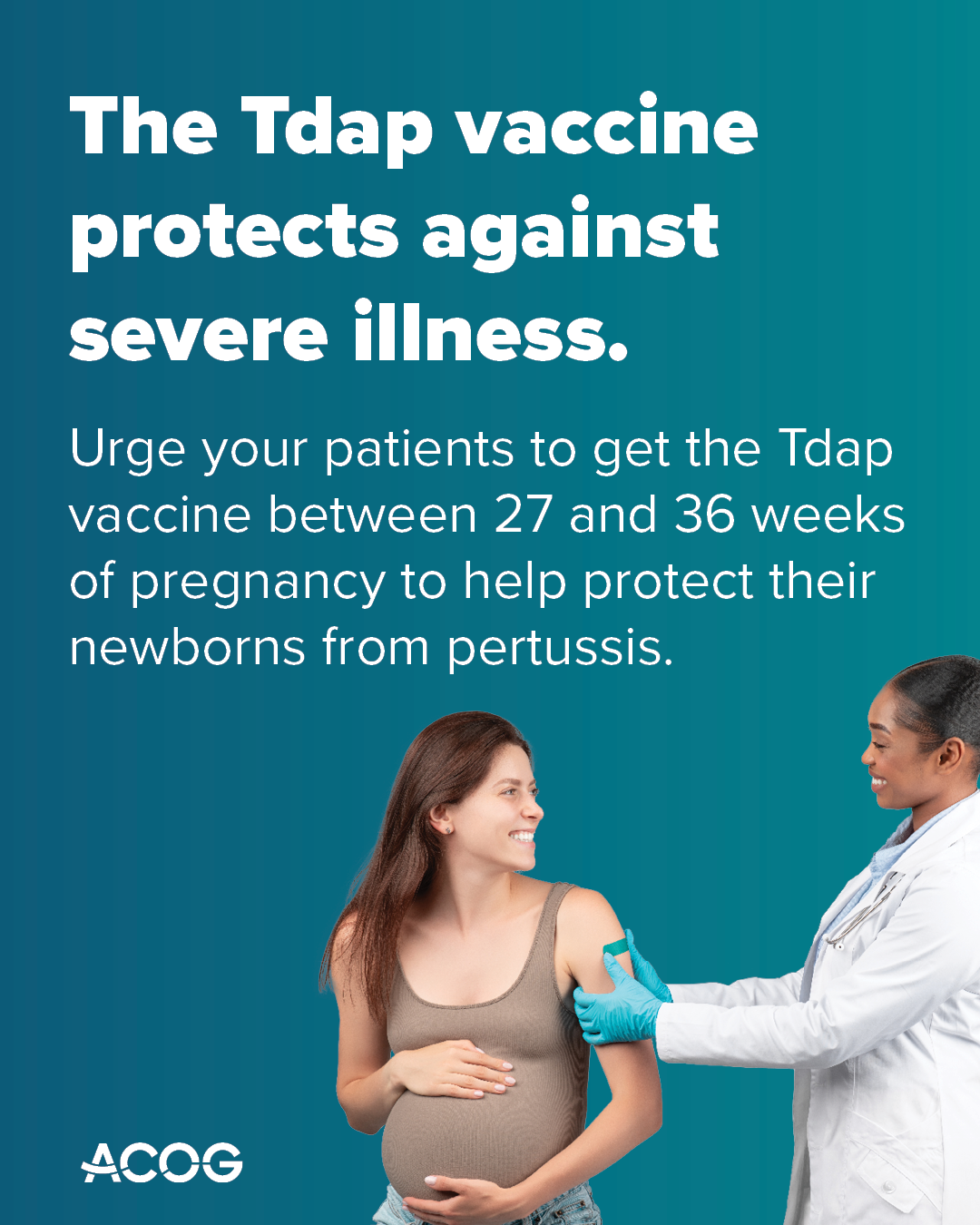
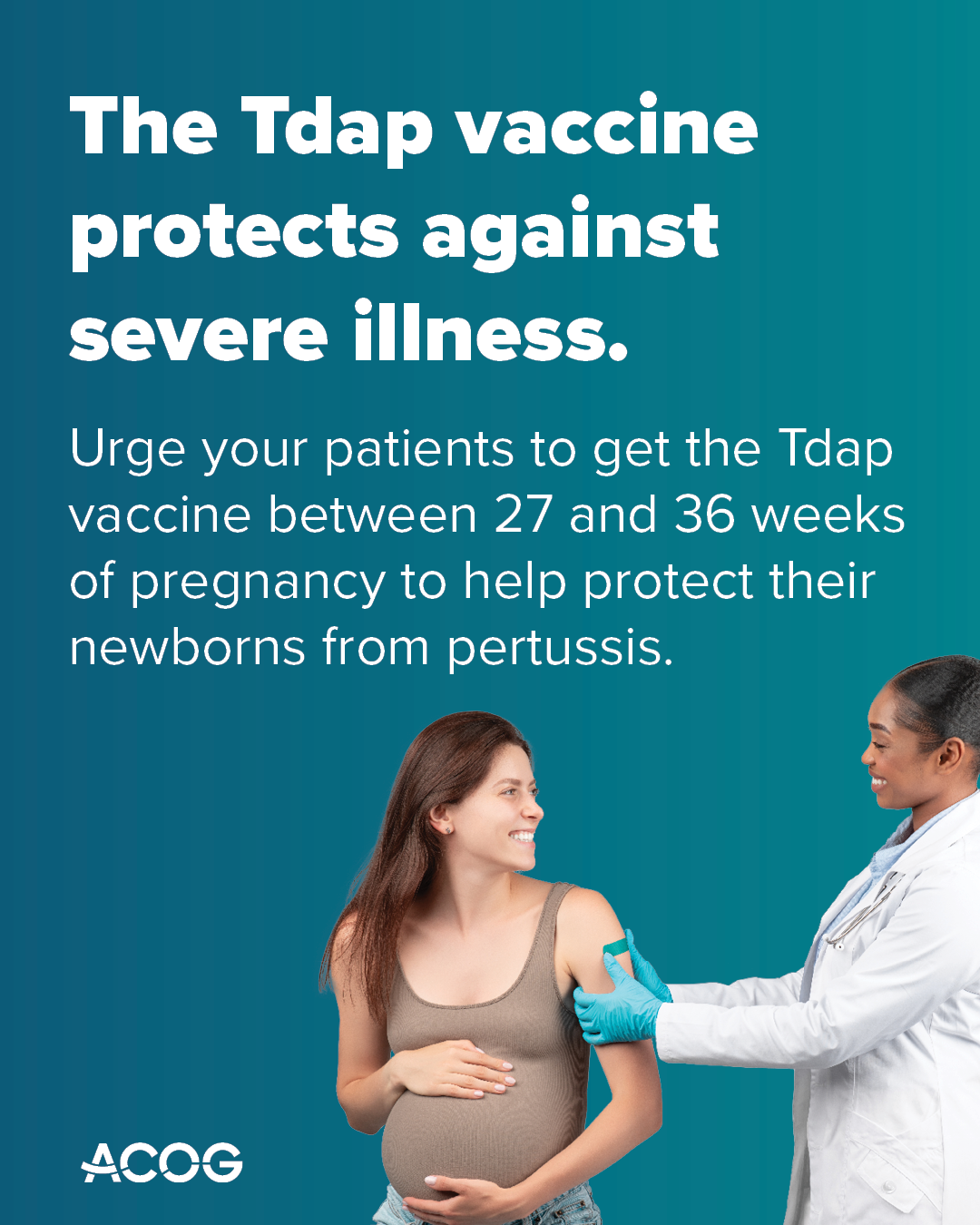
Your recommendation matters now more than ever. Talk with your patients about administering the Tdap vaccine between 27 and 36 weeks of pregnancy to protect their newborns, before they’re old enough to get vaccinated. Use this resource to recommend the vaccine: https://bit.ly/4mPyEeI
Associated Resource: Provider FAQ: Tetanus, Diphtheria, and Pertussis
Post 2
The Tdap vaccine is the best way to create a circle of protection against pertussis. When discussing the vaccine, recommend all caregivers and people interacting with newborns get vaccinated to provide a cocoon of protection. Learn more about this guidance: https://bit.ly/41iwnyz
Associated Resource: Update on Immunization and Pregnancy: Tetanus, Diphtheria, and Pertussis Vaccination (Committee Opinion)
This resource was supported by the American College of Obstetricians and Gynecologists (ACOG) and the Centers for Disease Control and Prevention (CDC) of the U.S. Department of Health and Human Services (HHS) as a part of a financial assistance award totaling $375,000 with 100 percent funded by ACOG and CDC/HHS. The contents are those of the author(s) and do not necessarily represent the official views of, nor an endorsement, by CDC/HHS, or the U.S. Government.