National Well-Being Week and Beyond
Join ACOG and CREOG February 2-6 for Well-Being Week!
About Well-Being Week
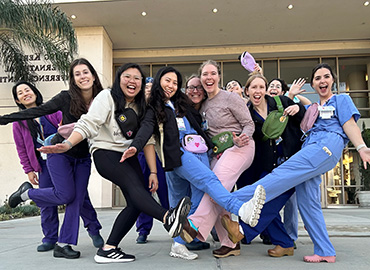
ACOG and CREOG partner each year to bring awareness to and celebrate the critical importance of physician wellness during Resident Well-Being Week. During the annual Well-Being Week, we encourage program leaders to lead efforts to improve their residents’ physical and emotional well-being and to consider how the environment and structures within medicine contribute to residents thriving or struggling. By creating these opportunities and making structural changes within our residency programs, we hope to not only improve resident well-being but also focus on the well-being of trainees and programs as a whole.
How to Participate
This year’s Well-Being Week will celebrate ACOG’s 75th anniversary—and look to the next chapter of progress in obstetrics and gynecology. To honor ACOG’s 75-year legacy of strengthening ob-gyn education, we hope to see at least 75 residency programs learning, sharing, and talking about wellness in their programs and in their personal lives.
To join the conversation, share your experiences of championing well-being on the social media platform of your choice and use the hashtag #ACOGBeWell2026. Follow @ACOG_Member on Instagram for the latest Well-Being Week discussions and programming.

Well-Being Activities at ACSM
Join us at the 2026 ACOG Annual Clinical & Scientific Meeting for a dynamic lineup of well-being sessions designed to inspire, equip, and connect. This year’s offerings spotlight the power of innovation, peer connection, and creative renewal in supporting clinician wellness and patient care.
Featured Well-Being Talks
Time Well Spent: Leveraging AI to Better Care for Patients and Health Care Professionals
Melissa Wong, MD | Sunday, May 3, at 8–9 a.m.
Explore how artificial intelligence can enhance not only clinical efficiency but also the well-being of care teams, with insights from Dr. Wong on balancing tech and humanity in medicine.
How to Build a Peer Support Program
Mibhali Bhalala, MD; Marie Boller, MD; Laurie Gregg, MD; and Judith Kimelman, MD | Friday, May 1, at 8–9 a.m.
Learn from seasoned leaders about designing and sustaining impactful peer support programs that foster resilience, connection, and psychological safety.
ACOG National Well-Being Program Activities:
ACOG National Well-Being Program Activities
Peer Support Training Session
Sunday, May 3, at 9:30 a.m.–12:30 p.m.
Ready to give back? Join this interactive training and take the first step toward becoming an ACOG National Peer Supporter. Use your lived experience and new skills to support fellow clinicians when they need it most.
Art Therapy Session
Ongoing in the Exhibit Hall
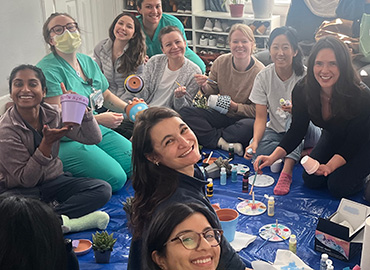
Pause, reflect, and recharge through creative expression. This drop-in session invites attendees to explore art as a pathway to mindfulness and renewal.
Beyond Well-Being Week
In 2023, we launched Beyond Well-Being Week: Ignite the Well-Being of Your Residency Program. We provided ideas for activities focused on physical and mental health, made suggestions for how to improve the well-being of the communities you serve, and provided guidance about how to have difficult conversations within your residency program to address systemic causes of burnout. In addition to promoting wellness during Well-Being Week in 2023, we kick started quarterly wellbeing newsletters to encourage our residency programs to promote wellbeing throughout the year.
-
Turning Annual Survey Data into Sustainable Change
Summer in graduate medical education is a time for change, transitions, and reflection. Amidst revising schedules, updating educational materials, and organizing onboarding for newcomers, program leaders must also process feedback from annual program evaluations. Processing feedback can be difficult—it may trigger self-doubt or imposter syndrome. Below are practical strategies to help program leadership stay on top of issues and respond when program citations arise.
Combating the Element of Surprise
Critical feedback on annual surveys is particularly alarming when it comes as a surprise. Consider the following approaches to surface concerns early and foster open communication:
- Hold monthly or quarterly town-hall meetings with the program director or associate program director to keep leadership informed about emerging concerns.
- Organize program-level class meetings to provide learners a safe space to voice concerns and develop solutions.
- Add an extra open discussion with the program director and associate program directors two to four weeks before annual surveys so learners can raise issues and leadership can respond promptly.
Cultivate Psychological Safety
Surgical residents often report higher burnout rates than nonsurgical colleagues. Psychological safety is a key factor in building high reliability and reducing burnout. In team-based fields such as inpatient obstetrics and gynecology, it is vital that residents feel safe speaking up and reporting concerns.
Cultivating psychological safety can be challenging for program directors, who also face long hours and many obligations. Strategies include:
- Practice inclusive leadership by forming resident–faculty workgroups to address program concerns so residents are directly involved in problem solving.
- Involve senior residents in leadership discussions and let them gather and represent resident input.
Response and Follow-up
Responding to raised concerns effectively requires intentional communication and follow-through. Consider these tips:
- Use clear subject lines for important emails so residents can find updates later; avoid burying key information in long, group-wide messages.
- Prefer in-person meetings for major updates or changes to allow immediate dialogue.
- Send targeted follow-up emails to update stakeholders on progress for specific concerns.
- Leverage chief residents or designated workgroup members to disseminate information and gather feedback.
Institutional Resources
You are not alone. Larger program concerns often require institutional support. Remember to:
- Engage resources such as the department chair, designated institutional official, or vice chair for education.
- Use professional networks—like the CREOG Listserv—to learn what others have tried and what worked.
- Prioritize mitigating burnout among program directors as well as residents; building a community of educators supports resilience and sustainability.
Resources
- Desai V, Conte AH, Nguyen VT, Shin P, Sudol NT, Hobbs J, Qiu C. Veiled Harm: Impacts of Microaggressions on Psychological Safety and Physician Burnout. Perm J. 2023 Jun 15;27(2):169–178. doi:10.7812/TPP/23.017. PMID: 37292028; PMCID: PMC10266841.
- Fu Q, Cherian J, Ahmad N, Scholz M, Samad S, Comite U. An Inclusive Leadership Framework to Foster Employee Creativity in the Healthcare Sector: The Role of Psychological Safety and Polychronicity. Int J Environ Res Public Health. 2022 Apr 8;19(8):4519. doi:10.3390/ijerph19084519. PMID: 35457388; PMCID: PMC9028499.
-
As part of CREOG’s drive to help our programs incorporate well-being throughout the year, please see the Spring edition of our well-being series: Well-Being at Work.
It’s no secret that ob-gyn physicians are consistently one of the top professions experiencing burnout on the annual Medscape survey. Over half of ob-gyn physicians surveyed expressed they are grappling with burnout, depression, or both. Concurrently, the majority felt that a focus on their own health and wellness was a top priority or important.
Ways to focus on well-being have varied across the nation. Many might believe the way to achieve relief from stress and burnout is to take frequent vacations or request more time off. While this does allow for temporary relief, it is not always feasible for residents in training or faculty in leadership positions. At CREOG, we have listened to suggestions from colleagues, and we suggest shifting the focus to optimizing well-being at work.
National Well-Being Week should be a chance to showcase the teamwork of the residency. Enlist the help of the program manager, program directors, resident wellness committee, and champions to create a plan for the week. Many programs will plan one main event and then give suggestions for other topics throughout the week and year to avoid overstraining the leadership team. We encourage residents to write a letter of gratitude to their program managers and program directors.
The intent of CREOG Well-Being Week is not to make everyone unwell from the stress and worry of planning activities. The intent is to remind all of us to take time to reset both individually and collectively as a program and team. If the ideas and suggestions work better for your program to do another time of year, please feel empowered to do so.
We have compiled a list of suggestions for activities that can be done at work that will help foster a positive work environment and improve overall well-being:
- Involve your program manager and program director in team-building activities
- Consider assigning well-being time for residents on challenging rotations once a week or bimonthly so that residents can use this time for research, administrative work, or general well-being
- Foster positivity daily by setting an intention for the day, as the way we start our day can contribute to the team dynamic
- Consider giving gratitude during signout to the offgoing team for what they accomplished on the shift
- Encourage residents to focus on gratitude for those that help organize schedules and administrative tasks, such as the program managers and chief residents
- Foster inclusivity in the workplace by reminding others and encouraging inclusion of all learners and voices, not just the most senior or the loudest
Residency is a transitional time for ob-gyn physicians, and an opportunity to set the foundational skills for attaining well-being at work. In our role as residency program leaders, we influence the workplace culture. We hope you can use these suggestions to incorporate well-being into your program.
-
The fall 2024 edition of our well-being series is about substance abuse in medicine.
It is estimated that approximately 10–15% of health care professionals have abused drugs or alcohol at some point in their career. Another study demonstrated that the abuse of alcohol is on the rise, with an increase in rates from 16.3% to 26.8% in a span of 15 years. Identifying who is at risk is difficult, as physicians are a high-functioning group to begin with, and substance abuse can affect anyone.
It is possible to screen and identify those at risk and help them receive treatment. Overall rates of recovery tend to be higher in health care professionals and it is rare for the recovery to be complicated by punitive actions in medicine.
Different methods of treatment, such as outpatient behavioral therapy, inpatient treatment, or medication, may be appropriate depending on each individual’s situation. Below are some resources for screening, information, and treatment:
-
Addiction in Medicine
We hope you find these useful. Please share these resources with learners and allow yourselves to request time off for mental health and well-being as needed.
-
-
The spring edition of our well-being series addresses Stress Management and Mitigating Burnout.
Spring is a time of renewal, and new beginnings can be challenging in medical education. You are busy during this time of the year planning graduation, working on credentialing, adjusting the curriculum, assessing program evaluations, and cultivating connections with new residents. Residents are transitioning to the next level in training or a new professional opportunity and may be preparing for new leadership roles.
The transitions during this season can lead to stress, burnout, or moral injury. Remember to be kind to yourself and give yourself grace. We hope the following suggestions on healthy coping mechanisms will be useful to you and your residents:
- Take a pause when feeling stressed
- Evaluate and reframe your mindset
- Form processing groups for stressful rotations/situations
- Debrief after poor clinical outcomes
- Change your surroundings when possible
- Look for sources of stress you can limit
- Turn off the news or social media
- Avoid certain individuals that cause you unnecessary stress
- Understand your limits
- Consider career counseling
- Share resources to support residents through transitional periods
- Engage with your surroundings
- Community service
- Plant a tree or join a community garden
- Clean-up a park
- Spend time doing things that you might find meaningful
- Spend time with your pet(s) or give pet therapy a try!
- Spend time with your social networks – vent to friends & family in a non-judgmental space
- Spirituality and meditation
- Creative writing and narrative medicine
- Create schedules and routines
- Regular exercise
- Eating well
- Physical and mental rest
Also, please be wary of negative coping skills, such as being overly busy, doomscrolling, substance use, and alcohol use. Please remind learners and yourself that you can request time off in the form of wellness or mental health days or PTO, as needed.
- Take a pause when feeling stressed
-
Our Fall 2023 Newsletter included some resources for mental health awareness and suicide prevention that you may find useful.
We appreciate that the individual needs of each program are different, and we suggest the following as a part of the broader wellness framework. You may consider circulating these resources quarterly to your residents to continue to highlight the importance of mental health and suicide prevention.
Mental Health Awareness
- Institutional resources and suggestions
- Find out whether your GME office offers mental health resources to all residents at no cost and, if so, how residents can access these easily, then send this information to them
- Give wellness days so that your residents can attend physical and mental health appointments
- Schedule individual appointments with new interns regarding their adjustment to residency
- Refer to your wellness chief or wellness committee for assistance with mental health check-ins
- National resources
- Marvin mental health counseling provides a physician-focused approach and after-hours telehealth appointments
- Lyra Health provides department-wide telehealth services
- Standardized biannual check-ins with professional mental health counselors with opt-out option for residents
Suicide Prevention
- Watch preventing medical trainee suicide video
- Call 988 Suicide & Crisis Lifeline
- Text HOME to 741741 to reach the Crisis Text Line
As you embrace this theme, take some time to reflect on ways to continue to mitigate systemic threats to well-being. Are there preventable factors that are leading to repetitive moral injury in your residents and faculty? Can you schedule a meeting with your chair or dean to address these?
Remember to fully use your program resources when available and continue to work on ways to manage your personal stress and well-being. Please let us know if there is any other way we can assist you and your program.
- Institutional resources and suggestions
-
As you plan your next academic year, take the time to reflect on your current and past successes toward well-being and ways to build upon them or enhance them in your program for the next academic year. We want to share some ideas that can help improve and incorporate well-being for yourself and your program throughout the academic year.
Start by incorporating ideas from our annual Wellness Week Themes and Activities list! You can explore additional resources for specific areas of need below.
Program Managers
CREOG supports the vital efforts that the Association of Program Managers in Obstetrics and Gynecology (APMOG) council has been making to facilitate promote manager well-being and professional growth over the past three years. CREOG and APMOG will work together to continue to facilitate opportunities for managers to focus on their own well-being.
APMOG plans to host regular educational sessions during the workday to help with feeling overwhelmed at work. Stay tuned for more information! APMOG and the Committee on Fellowship Training in Obstetrics & Gynecology have a formal mentorship program for new managers. Please reach out to your regional representative for additional information.
You may be busy making sure everyone else is taken care of and forget to think of your own well-being. Consider these ideas:
- Make a vision board to highlight your professional growth
- Take time in your day to add to your knowledge
- Go on a walk
- Make a phone call you have been putting off
- Connect with someone at work who fills your cup
Program Directors
Use the CREOG Education Retreat as a rejuvenating time for information sharing and social networking!
If you’re taking time off, take the time—it’s okay to truly take a vacation and disconnect. An assistant program director or other trusted faculty member can cover in your absence.
Systemic Threats
There are always systemic threats to well-being within medicine. If you met with your chair or dean during Wellness Week, what actionable steps did you discuss, and have you followed up on their progress? If you have not met, consider having a conversation about the systemic issues that threaten well-being and how to improve the environment of the program. There are always ways, both big and small, to help trainees thrive.
Transition to Residency
What are some of the activities that you can do with your new matched interns that incorporate aspects of well-being? Check out CREOG’s Transition to Residency Curriculum!