

Membership and Fellowship |
Byllye Avery: A Public Health Pioneer
Byllye Avery’s journey to becoming a public health pioneer found its footing in the 1970s, when her husband passed at just 33 years of age from a heart attack. His physicians had told him that he had hypertension, but not what risks the hypertension might cause.
For Avery, who had grown up in an era during which many women didn’t have access to information on preventing pregnancy or the contraceptive methods to do so, her husband’s death was transformative, and she shifted her focus to becoming a health educator and ardent supporter of the women’s health movement.
In 1974 she cofounded the Gainesville Women’s Health Center and an alternative birthing center, both in Gainesville, Florida. She established the nonprofit organization Avery Institute for Social Change, which works to address the disparities that communities of color face in accessing and receiving health care services.
Toward the end of the 1970s, Avery was researching for a paper about Black women’s health. She couldn’t find much information, and what she found was troubling. Black women in the 1980s experienced numerous health disparities, and still do today: for example, looking at obstetric and gynecologic concerns alone, Black women are at significantly higher risk for preeclampsia, death from breast cancer, and maternal death, among other health issues. It was clear to Avery that Black women’s health needs were unique, and that they needed unique health care solutions. Gathering Black women to hear from them about their lives, their health, and their experiences seemed like the best starting place for closing those gaps in health and care.
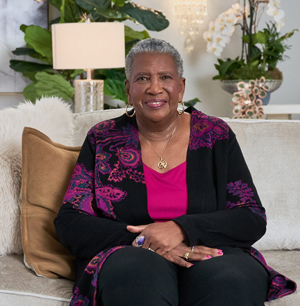
Image: Black Women's Health Imperative
In 1983, Avery organized the First National Conference on Black Women’s Health Issues, which gathered nearly 2,000 women to discuss Black women’s health, share their knowledge, and recognize the social factors that affected their health and experiences with the health care system.
After the conference concluded, Avery, together with public health leader Lillie P. Allen, who led a workshop during the conference, launched the National Black Women’s Health Project. The Project’s work began with comprehensive public education initiatives to promote Black women’s wellness and providing Black women with forums where they could gather and discuss their health and the experiences that informed it, such as racism from doctors and society at large and interpersonal, domestic, and sexual violence.
The Project’s work was critical to introducing into the national conversation the idea that race, gender, socioeconomic class, and sexuality, among others, inform and shape health. In the 2000s, shortly after moving their headquarters to Washington, D.C., the Project—since renamed the Black Women’s Health Imperative—began advocating for change at the national level through programs on health policy, education, research, and more.
In 1989, Avery was named a MacArthur Fellow for her health policy work, and the impact of her work leaves no doubt as to why. She has ensured that Black women’s unique health risks and needs were part of the national conversation and empowered Black women to speak up, learn about their health, and get the care they need.
Avery’s work champions the idea that a person’s health is shaped by their life and, therefore, by the social, cultural, and economic influences that make up their environment. She demonstrated that health education is just as important as advocacy and access when it comes to ensuring that people can take an active role in improving, protecting, and caring for their health and bodies.
To learn more, read “Three Days That Changed the Thinking About Black Women’s Health” from The New York Times and listen to Signs’ “Ask a Feminist” interview with Avery.
The national theme for Black History Month 2026 is A Century of Black History Commemorations, marking the milestone of 100 years of national observances of Black history. In honor of this theme, ACOG will be highlighting some of the many contributions that Black ob-gyns, physicians, and innovators have made to the field of obstetrics and gynecology. Keep an eye on this page and ACOG’s social media channels to learn more.