

Membership and Fellowship |
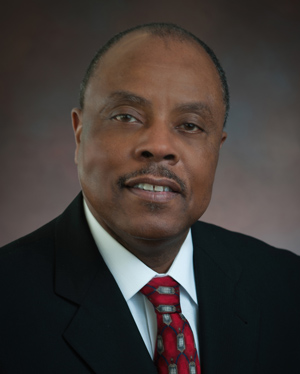
Haywood Brown, MD, FACOG: A Mentor, Pioneer, and Advocate
For over three decades, ACOG Past President Haywood Brown, MD, FACOG, has built a distinguished career in education, clinical practice, and medical research. He has become a prominent voice for improving diversity and inclusion in the field of obstetrics and gynecology. He is also a dedicated and involved mentor: Through his numerous leadership roles, including his tenure as ACOG president in 2017, he has been able to serve as an adviser and role model to an entire generation of Black physicians.
For Black History Month 2026, ACOG spoke with Dr. Brown about his achievements and impact as a mentor and the changes he still hopes to see in the field.
1. How important was mentorship from other Black physicians in the early stages of your career?
It was extremely important. There was only one Black male faculty member at my medical school. During my senior rotation with Dr. Raymond Cutts at Howard University, I was able to see how it felt to be supported by a Black physician with a busy and thriving ob-gyn practice. In my residency at the University of Tennessee, as the first Black resident, the local National Medical Association [NMA] chapter served as role models and mentors for me. My relationship with the NMA and the ob-gyn section has continued throughout my academic career to this day. It was how I first met Dr. Ezra Davidson, who was an amazing role model and mentor. He and others showed me who I was and what I could contribute to my field, education, other students, and residents and faculty of color.
2. What are some of the positive impacts you’ve seen because of your own mentorship toward young Black physicians?
I have been in academics for nearly 40 years at various institutions and developed relationships with many Black students, providing mentorship and setting an example for achieving excellence. This was especially important when they encountered microaggressions during training, which is not uncommon for medical students and residents even today.
At Duke, our ob-gyn department had one of the most diverse residency programs at the institution. Our Black residents were excellent, and today many of them are practicing clinicians, academic physicians, and division directors. I hear from many of them regularly. I nominate them for committees at ACOG and the Society for Maternal-Fetal Medicine [SMFM] and get them involved in the NMA. I provide nonjudgment mentoring and counseling almost every week.
It has been amazing to be recognized by many of these students, residents, and practicing clinicians as a mentor. My favorite example is when Dr. Jerome Adams, former U.S. surgeon general, reminded me that he was my student at Indiana University, and I actively made sure he delivered a baby during his rotation.
3. How have you seen things change in the field of medicine throughout your career, and how have Black physicians played a role in that change?
There hasn’t been enough change. An AAMC [Association of American Medical Colleges] report in 2018 indicated that the number of Black males graduating from U.S. medical schools has not increased in 40 years. One of my commitments as an educator is to increase the number of underrepresented students in medical schools and to contribute to the care of a very diverse population and to health equity. I recognize that we must get involved with students at the high school and undergraduate level and make ourselves available to encourage them to seek health careers.
I am actively involved in two programs currently. I have served as an adviser at the undergraduate level and informed students of how critical the science GPA and MCAT are in getting into medical school. I continue advising regardless of what specialty they choose. I encourage other physicians to make themselves available and have an open-door policy. This is more critical now than ever, with the noise and anti-DEI sentiment designed to make Black and Brown students and physicians feel that they are unworthy.
4. Why do you think it’s important to uplift the contributions of Black physicians?
In the current climate, we are seen as not worthy of recognition for our success or accomplishments. Our success is seen as unearned. We must never let that happen, and we must lift up and not tear down. That was my message this month when I received the 2026 SMFM DEI award at this year’s meeting in Las Vegas. My message was how important it is to continue to lift up and not tear down. That was one of the most cherished honors I have ever received, surrounded by a full room of hundreds of my peers.
5. What advice would you give to a physician aiming to follow in your footsteps?
I try to give back and do that almost every day. Strive for excellence and don’t let anyone get in the way of reaching your goals and your dream to contribute to health equity and wellness.
This interview was edited for brevity and clarity.
The national theme for Black History Month 2026 is A Century of Black History Commemorations, marking the milestone of 100 years of national observances of Black history. In honor of this theme, ACOG will be highlighting some of the many contributions that Black ob-gyns, physicians, and innovators have made to the field of obstetrics and gynecology. Keep an eye on this page and ACOG’s social media channels to learn more.