

Membership and Fellowship |
Marilyn Hughes Gaston, MD: A Public Health Innovator and Leader
Marilyn Hughes Gaston, MD, built a career defined by public health leadership and a deep commitment to improving care for families in marginalized communities.
Born in Cincinnati in 1939, she decided when she was young to pursue medicine—a choice driven in part by witnessing her mother’s struggle with untreated cervical cancer. The difficulties that Dr. Gaston’s family endured because of their lack of health insurance and access to nearby care only strengthened her commitment to a career of helping people who would otherwise struggle with finding quality health care.
In 1960, she enrolled in the University of Cincinnati College of Medicine, where she was the only Black woman in her class. She went on to train in pediatrics at Philadelphia General Hospital. During her internship at Philadelphia General, she encountered a child with an infected, swollen hand; an eventual diagnosis of sickle cell disease (SCD) drove Dr. Gaston’s to learn everything she could about the disease. A group of inherited red blood cell disorders, SCD is the most common genetic blood disease in the Unites States and disproportionately affects people of African descent.
Dr. Gaston secured federal grants to study SCD in children and established protocols for routine screening. She later became deputy branch chief of the Sickle Cell Disease Branch at the National Institutes for Health. In 1986 she led a breakthrough study that found that early detection paired with prophylactic penicillin could prevent life-threatening SCD infections—a discovery that spurred Congress to introduce legislation to fund screening programs nationwide. This lifesaving practice became a U.S. Public Health Service policy and ensured that thousands of infants—many born to families in communities that were historically underserved—could receive critical, life-changing care immediately.
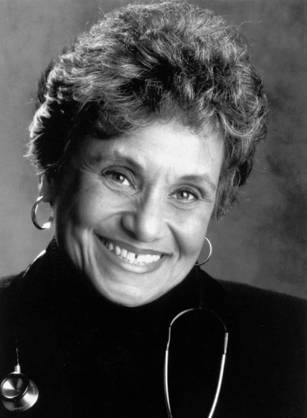
Image: National Library of Medicine - National Institutes of Health
Dr. Gaston’s work didn’t end with her SCD breakthroughs. She became the first Black woman to direct a public health service bureau when she was appointed director of HRSA’s Bureau of Primary Health Care. In that role, she oversaw programs serving millions of low-income, uninsured, and underserved individuals, including pregnant women and young families who relied on primary health centers for essential care.
She later coauthored Prime Time: The African American Woman’s Guide to Midlife Health and Wellness, which addresses important health topics for Black women over 40, including menopause, to help them to take charge of their health.
Dr. Gaston’s leadership not only transformed the management of sickle cell disease but also strengthened the systems that support maternal and newborn health. During Black History Month, we honor her extraordinary achievements by recognizing the communities she served, the barriers she dismantled, and the generations of clinicians and families whose lives have been improved by her work.
The national theme for Black History Month 2026 is A Century of Black History Commemorations, marking the milestone of 100 years of national observances of Black history. In honor of this theme, ACOG will be highlighting some of the many contributions that Black ob-gyns, physicians, and innovators have made to the field of obstetrics and gynecology. Keep an eye on this page and ACOG’s social media channels to learn more.